Thursday, 29 October 2015

CIRCLE Fellowship and Travel Grants Promote Research Visibility and Networking during Global Events Held in New York, USA

Olawale Emmanuel Olayide, University of Ibadan, Ibadan, Nigeria (Home Institution)
Cohort 1 Visiting Research Fellow

Introduction
This report captures the activities at the conferences, meeting, workshop, and United Nations summit on Sustainable Development Goals (SDGs) during 18 September to 15 October, 2015 in New York, USA.

The Third International Conference on Sustainable Development (ICSD)
The third International Conference on SustainableDevelopment (ICSD) was held at the Columbia University, New York, in September. With over 1000 participants from around the world the conference aimed to identify and share practical, evidence-based solutions that could support the Sustainable Development Goals (SDGs). I participated actively as a member of the Scientific Committee and Chair of the Technical Session on Climate Change and Access to Energy and also presented a research paper titled “Review of Vulnerability and Policy Responses to Agricultural Water Supply and Extreme Rainfall Events in Nigeria” (click here for a link to the presentation). The conference offered a great opportunity for networking and sharing research experiences with other international researchers, as well as receiving feedback on research outputs. A key point emerging from the session on climate change and access to energy was the need for development (at community, regional and national levels) that favours progressive and sustainable investment in renewable sources of energy.

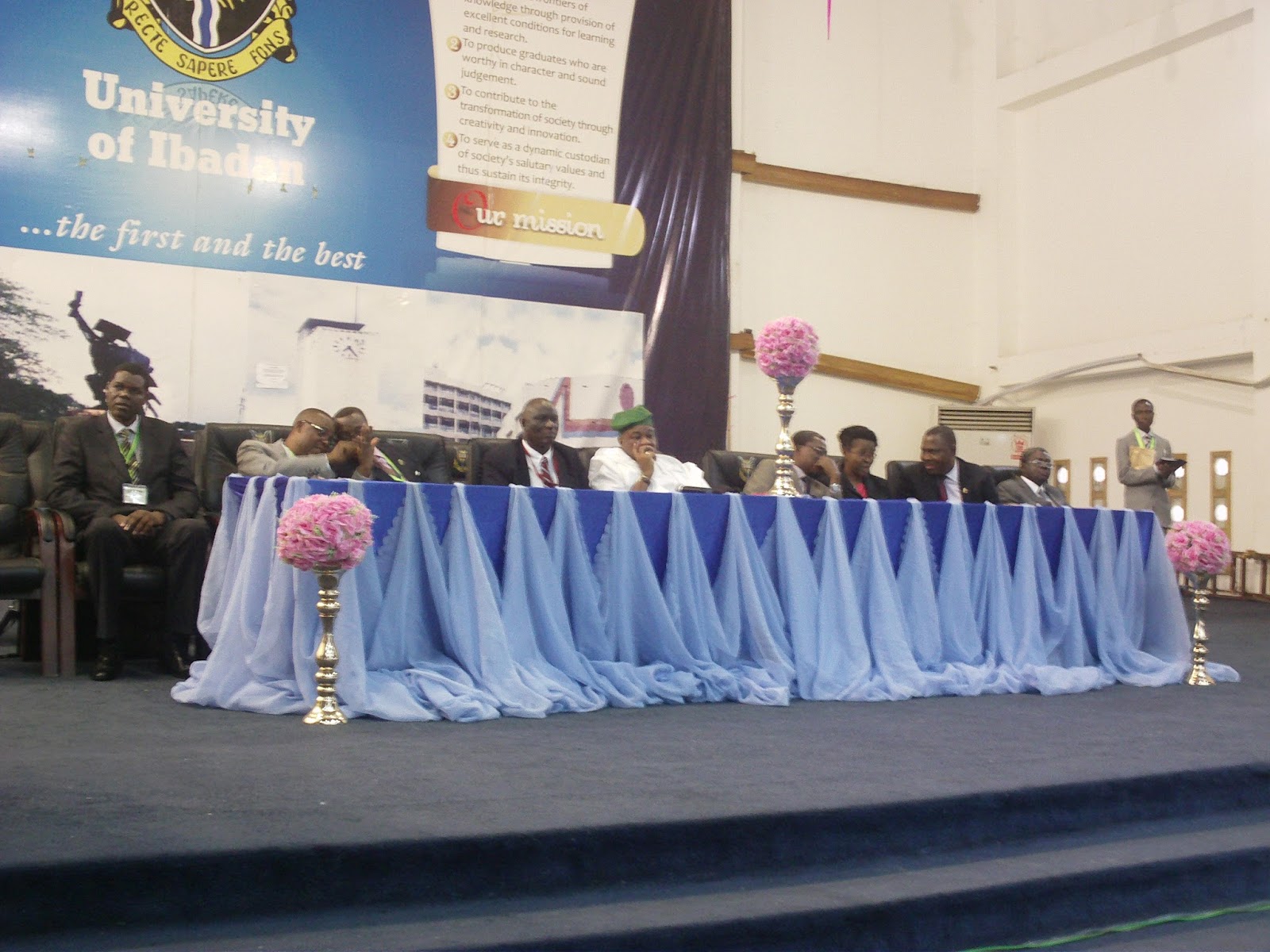
Olawale Olayide, CIRCLE Post-Doctoral Research Fellow at the Third International Conference on Sustainable Development (ICSD), Columbia University, New York City, USA

Special Panel on Extractive Industries and the Sustainable Development Goals (SDGs): Enhancing Collaboration for Transformation and Sustainability
The special panel session on extractive industries and the sustainable development goals (SDGs) that followed the ICSD conference emphasised that the lack of prudent management of the natural resources was a major challenge limiting sustainable development of the extractive industry. The panelists concurred that the oil and gas sector should be differentiated from the mineral industry. It was also noted that the oil and gas sector is a major contributor to climate change through carbon dioxide emissions. The panel opined that renewable sources of energy should be encouraged in order to mitigate the impact of fossil fuels on the environment. The importance of the mining sector in terms of its contributions to economic growth was acknowledged, but this needs to be weighed up against the negative impacts on health and the environment. It noted that the world has a lot of untapped natural resources which could be harnessed for sustainable development. It was emphasized that research and policy frameworks should focus on such issues as reclamation, remediation and closures of mines so as to engender sustainable development in the mining sector.

The final event I attended in New York offered scholars and researchers the opportunity to present recent research findings to a global scientific audience and community of practice. The various presentations provided understanding on the behavioural, biophysical, economic, institutional, political, social and technological drivers of current and future global food security. The conference also addressed the issues of food system activities, including processing, distributing and consuming food, as well as food production from crop, livestock, tree, freshwater and marine sources; the availability, access, utilization and stability dimensions of food security; and the synergies and trade-offs between economic, environmental, health and social objectives and outcomes.

Cross-section of Participants during One of the Plenary Sessions at the Second International Conference on Global Food Security 2015 held at Cornell University, Ithaca, New York, USA

I participated actively and made a presentation titled: “What Happens When Rain Ceases to Fall? Trends, Variability and Hotspots of Rainfall, Food and Agricultural Production Indices in Nigeria Using Statistical and Geographic Information Systems Approaches”. The conference provided me with an opportunity to expand my research network with contacts in Cornell University’s research on Climate Smart Farming as well as the Food Climate Research Network of Oxford University in UK. More importantly, the global conference was facilitated by Elsevier and the journal on Global Food Security. I plan to submit the full paper presented at the conference to the journal on Global Food Security.

ACKNOWLEDGEMENTS
I profoundly acknowledge and appreciate the financial support from the Department for International Development (DfID) which was provided under the Climate Impact Research Capacity and Leadership Enhancement (CIRCLE) programme. The conducive environment for research provided the University of Ibadan, Ibadan, Nigeria (Home Institution) and Kwame Nkrumah University of Science and Technology, Kumasi, Ghana (Host Institution) is well cherished. I also appreciate the African Growth and Development Policy (AGRODEP) Modeling Consortium which is facilitated by the International Food Policy Research Institute, and United Nations Sustainable Development Solutions Network UNSDSN), for providing additional funding support.

Friday, 25 September 2015

Impacts of land tenure arrangements on the adaptive capacity of marginalized groups: Lessons from Ghana

Dr Philip Antwi-Agyei, Kwame Nkrumah University of Science and Technology (KNUST), Ghana
Cohort 1 CIRCLE Visiting Fellow

It is undeniable that our climate is changing. Recent evidence suggests that doing nothing about our changing climate could have serious implications for the livelihoods of many people, especially in Sub-Saharan Africa. Climate change adaptation is, therefore, crucial if rural livelihoods are to survive the adverse impacts of climate change and variability. Yet, adaptation efforts by rural households are confronted with many challenges.
Philip Antwi-Agyei, Ph.D.

I recently published a paper in the journal Land Use Policy that highlights that the changing nature of land tenure in many parts of Sub-Saharan Africa adversely impacts on the efforts of different social groups of farming households to initiate adaptation measures. The paper employed participatory methods to explore the linkages between land tenure arrangements and land management practices in 6 study villages of different climate vulnerability status in central and northeast Ghana. The paper sought to understand the impacts of land tenure arrangements on climate change adaptation efforts of different social groups in Ghana. The overall conclusion from the paper is that “land tenure, within the broader socioeconomic, environmental and political contexts, is implicitly involved in shaping the vulnerability of poor female and migrant farmers” to climate change in Ghana. Here, I unpack the key messages from this paper and outline policy implications.

Land tenure arrangements may impact on land management practices
Different social groups pursue different land management practices based on land tenure arrangements. The study revealed that migrant farmers who were renting their farmlands, and have insecure tenure engaged in short term land management practices. On the contrary, indigenous farmers who have inherited their farmlands employed long-term land management practices and climate adaptation practices including agro-forestry systems that have the potential to reduce their vulnerability to the adverse impacts of climate change.

Secure tenure may impact on land property rights
Migrant farmers and female farmers with less secure tenure may lack property rights and are disadvantaged in sourcing credit and other facilities to initiate livelihood adaptation strategies to reduce their vulnerability to climate change.

Policy implications
The paper recommends the need to institute pragmatic measures to reduce cultural discriminations against women via land reforms and restructuring to take care of the rights of women farmers. Opportunities for women to own and formalise land titles should be vigorously pursued by the Government of Ghana, whist at the same time strengthening the capacity of state institutions involved in land transactions through institutional capacity building to enable them to function effectively. Finally, the rights of migrant farmers should be formally recognised in policy documents to enable migrant farmers to initiate land-based adaptations measures in a similar manner to non-migrant farmers.

Philip explaining a point during a focus group discussion with women farmers

Reflections on CIRCLE Fellowship
It is important to stress that although this paper was developed prior to my CIRCLE fellowship, substantial revisions were made during my CIRCLE tenure. Being part of CIRCLE has brought immense benefits and further broadened my scope for research. Crucially, it has provided several platforms for networking and collaboration. For instance, it has provided opportunities for me to be part of the Climate Change Working Group at my Host Institution, the University of Ghana. Further, it has afforded me the opportunity to work with researchers from my host institution on a larger project on “women, food security and climate change in Ghana”. Other networks and collaborations have been forged with researchers from the UK and Canada on climate change and urban ecosystems as well as “Climate Smart Cities and Climate Change”. More importantly, the CIRCLE fellowship has given me opportunities to be involved in a number of publications in leading peer reviewed international journals including Land Use Policy, Environmental Science and Policy, Regional Environmental Change, Sustainability, and the Journal of Environmental Accounting and Management. Much of the collaborative research started during this fellowship is likely to provide opportunities for research into various aspects of climate change vulnerability assessments and adaptation even beyond my CIRCLE tenure.

For a copy of this paper, please see the following web page:


Philip Antwi-Agyei (Ph.D.) is a CIRCLE Fellow hosted at the University of Ghana and his Home Institution is the Kwame Nkrumah University of Science and Technology, Ghana.

Monday, 21 September 2015

CIRCLE Research: Contributing to Ecosystems Management, Restoration Ecology and Climate Change Mitigation

By Mrs Esther Ekua Amfoa Amoako, University for Development Studies, Ghana
Cohort 1 CIRCLE Visiting Fellow

I am a former fellow the UNU-LRT (United National University – Land Restoration Training) programme in Iceland. I have a background in Environmental Management which looks into policies and management of environmental and natural resources. I was enrolled in the six month UNU-LRT programme in 2012, which is where my interest in practicing restoration ecology began. In January 2015 I commenced the one-year CIRCLE Visiting Fellowship to further develop my research in this field.

Esther Ekua Amoako
Ecosystems management is important in climate change mitigation and adaptation. There are various forms of maintaining and improving ecosystems, mainly through conservation and preservation of species and habitats. The other forms of ecosystems management include restoration, and rehabilitation of degraded, damaged, destroyed or fragmented ecosystems.

Ecosystems degradation through deforestation, mining, bush burning, to mention but a few, create carbon sources that exacerbate the impacts of climate change. The irony is that while ecosystems degradation is a major cause of global climate change, the impact of climate change can in turn result in ecosystems degradation. When ecosystems are degraded the repercussions are enormous.

My research in the CIRCLE programme is on fire and terrestrial ecosystems management: The impact of anthropogenic bush burning on plant species and soils in West African savanna/ parklands. My focus is on the Northern Region of Ghana which is experiencing significant fragmentation of vegetation. The region which used to be categorised ecologically as the Guinea Savanna Zone is gradually transforming into Sudan Savanna (with fewer scattered trees). The result of human disturbances such as bush burning and deforestation has implications for both biodiversity and climate change.

My study is focused on measuring the density and diversity of tree species, soil seedbanks and soil nutrients under different fire management regimes. The seed bank experiment revealed a potential for natural regeneration of fire disturbed ecosystems. The soil organic carbon content is also measured and compared with tree densities on burnt and unburnt areas.

The study is contributing to the knowledge of fire in savannas in general and specifically to the Northern Region of Ghana, which has recorded higher occurrences of bush burning than the other nine regions of Ghana. It will serve as baseline information or reference for further studies, restoration of degraded lands, policies and advocacy on fire management.

Most Universities in Ghana place emphasis on issues of sustainable land management, biodiversity and conservation etc. which are more focused on the science and knowledge of environmental management. Ecological restoration, however, is the practice of restoring or rehabilitating degraded ecosystems which is what is needed most in sub-Saharan Africa.

Ghana for instance, has to buy back its diminishing (estimated at 1.3-1.7% per annum) vegetation cover and forest resources through restoration. Looking at a situation we find below calls for urgent actions from all stakeholders.


The satellite images below show the vegetation cover loss between 1973 and 2003 and anthropogenic fire active zones


Sources: Global Forest Resources Assessment 2010, Country Report, Ghana                       MODIS/ NASA 2012

A positive aspect of the CIRCLE programme is its support for networking with stakeholders: in particular sharing research information with non-acadamics and policy makers. I think the findings of my research can not be shelved but must be shared. It has a lot of policy implications  for ecosystems magement, which can be tranferred to all stakeholders. This can only be achieved through collaboration between my host and home institutions and others like the Environmental Protection Agency (EPA) and Environmental NGO’s. This will surely reinforce the leadership enhancement aspect of the CIRCLE progamme.

In the long term, it is my hope and desire that indiscriminate burning will be reduced and more carbon sinks created to ensure healthy ecosystems that will contribute to mitigating climate impacts. My research is directed toward this objective and aligns firmly with the goal of the Society for Ecological Restoration.

Esther Ekua Amoako is a CIRCLE Visiting Fellow from the Unversity for Development Studies, Ghana, currently hosted at the University of Dar Es Salaam, Tanzania.

Friday, 11 September 2015

Outcomes of the 6th Annual Ibadan Sustainable Development Summit (ISDS) 2015


Preamble

2015 will see the replacement of the Millenium Development Goals with the Sustainable Development Goals (SDGs). It is therefore apposite to consider promises that the SDGs hold for overcoming the various development challenges in Africa. Africa cannot afford to be left behind in the on-going global development agenda setting. The ensuing SDGs, therefore, offer another opportunity for Africa to be more proactive in ensuring sustainable development in the continent as well as progressive transformation of economies and societies. Considering the disparate achievements of many African countries in the soon to be concluded MDGs, the organisers of the 6th annual Ibadan Sustainable Development Summit (ISDS) considered it apt to bring to the fore the level of preparedness or otherwise of the continent and what lessons it has learnt from the MDGs, as well as the expected roles from numerous stakeholders in the sustainable development spectrum.

The Organization of the Summit, Participation, Paper Presentations and Publications

The summit was organised by the University of Ibadan Centre for Sustainable Development (UI-CESDEV) in collaboration with the African Sustainable Development Network (ASUDNET) and Sustainable Development Solutions Network- Nigeria (NSDSN). It was held during 23 – 28 August, 2015. The theme for the summit was The Post-2015 Sustainable Development Agenda: Whither Africa?


About 230 people from 10 countries in Africa (Ghana, The Gambia, Kenya, Ethiopia, South Africa, Nigeria) and Europe (Italy, France, Netherlands, United Kingdom) participated at the summit. There were also representatives of Governments (including high-level delegation from the Gambia) as well as Non-Governmental Orgranisations (including the Nigerian Network of NGOs), Students and Alumni Associations. Young scholars and researchers presented papers on a range of sustainable development issues at the summit. There were two keynote addresses by Professor Godwell Nhamo of the University of South Africa (UNISA), a CIRCLE supervisor,  and Ambassador Oluseyi Onafowokan, the Nigerian High Commissioner to Ghana. 11 plenary sessions based on the sub-themes of the summit were led by seasoned scholars. A total of 67 technical paper presentations were made. The plenary papers will be published in the summit proceedings while authors of the technical papers are advised to send the revised papers for consideration and publication in the African Journal of Sustainable Development (AJSD) (http://www.ajol.info/index.php/ajsd).

Formation of Research and Working Groups

For the implementation of the SDGs, the meeting grouped the SDGs by similarity and complementarity, and proposed the following five research and working groups for the purpose of driving research, advocacy and implementation of the goals. The summit therefore, set up five research and working groups around the Sustainable Development Goals as follows:

Group 1: Goal 1: End poverty in all its forms everywhere; Goal 2: End hunger, achieve food security and improved nutrition, and promote sustainable agriculture; Goal 3: Ensure healthy lives and promote well-being for all at all ages; and Goal 8: Promote sustained, inclusive and sustainable economic growth, full and productive employment and decent work for all.

Group 2: Goal 4: Ensure inclusive and equitable quality education and promote life-long learning opportunities for all; and Goal 5: Achieve gender equality and empower all women and girls

Group 3: Goal 9: Build resilient infrastructure, promote inclusive and sustainable industrialization and foster innovation; Goal 11: Make cities and human settlements inclusive, safe, resilient and sustainable; Goal 12: Ensure sustainable consumption and production patterns; Goal 16: Promote peaceful and inclusive societies for sustainable development, provide access to justice for all and build effective, accountable and inclusive institutions at all levels.

Group 4: Goal 6: Ensure availability and sustainable management of water and sanitation for all; Goal 7: Ensure access to affordable, reliable, sustainable, and modern energy for all; Goal 13: Take urgent action to combat climate change and its impacts; Goal 14: Conserve and sustainably use the oceans, seas and marine resources for sustainable; Development; Goal 15: Protect, restore and promote sustainable use of terrestrial ecosystems, sustainably manage forests, combat desertification, and halt and reverse land degradation and halt biodiversity loss.

Group 5: Goal 10: Reduce inequality within and among countries; Goal 17: Strengthen the means of implementation and revitalize the global partnership for sustainable development

Membership of the research and working groups comprises representatives from the academia, government and non-governmental organisations and they cut across institutions, disciplines and universities. Others are encouraged to join. The groups will be expected to compete for grants, do advocacy and enlightenment, regarding the SDGs. Several participants in the groups are also involved in the CIRCLE programme, including Prof Godwell Nhamo, from the University of South Africa; Prof Labode Popoola, from the University of Ibadan; Dr Olawale Olayide from the University of Ibadan and Dr Divine Appiah, a CIRCLE Visiting Fellow currently hosted at the University of Ibadan.

Need for Collaboration

Participants emphasized the need to actualize the important goal of partnership/collaboration as key to achieving the other goals. It therefore, resolved to sustain the unity of purpose demonstrated at the meeting by the key stakeholders from the civil service, universities, research centres, NGOs, students, and the private sector. The universities in particular, were challenged to take the leadership position in the implementation process, with government, providing the needed support. The meeting also highlighted the steps taken towards actualizing a pan-Africa partnership towards achieving the SDGs by Gambian President Yahya A.J.J. Jammeh’s  Pan-African commitment to Sustainable Development and support for an annual Ibadan Sustainable Development Summit. The Gambia President sent a powerful delegation of nine senior members in his government comprising a junior minister, permanent secretaries, Director General, and Special Assistants in the Presidency. This was viewed as exemplary, for which other African heads of government should emulate in subsequent summits.

Conclusion and Next Steps

The theme of the summit was very timely, as the summit offered a veritable platform on current debates on the sustainable development goals and underscored the role of Africa in the processes and expectations of implementation frameworks. The research and working groups are tasked with developing proposals and strategies for domesticating the Sustainable Development Goals for Africa, especially the ECOWAS region. They would also sustain the collaboration among the academia, NGOs, PSOs and governments in Africa. International support and collaboration were also emphasized as germane to achieving the SDGs. The seventh ISDS will take place in August 2016 and the theme will be determined in due course.

Labode Popoola
Director, CESDEV & Co-Director, SDSN-Nigeria

Olawale Olayide
CIRCLE Post-Doctoral Visiting Research Fellow, Kwame Nkrumah University of Science and Technology, Research Fellow & Coordinator, EPNARP,  CESDEV, University of Ibadan

For and on behalf of the Organisers

Friday, 4 September 2015

ILRI emerging career researchers learn to use ‘paperless’ data collection techniques

By Joyce Maru from The International Livestock Research Institute (ILRI), Kenya

This post is re-posted with permission thanks to Joyce Maru from The International Livestock Research Institute (ILRI). For the original post, please follow this link.

Emerging career researchers (ECRs) at the International Livestock Research Institute (ILRI) were recently trained to better collect, organize and manage the data they generate during their day-to-day research activities, starting from data collection in the lab or field through to publishing of research results and archiving.


Using the Open Data Kit at ILRI Ethiopia

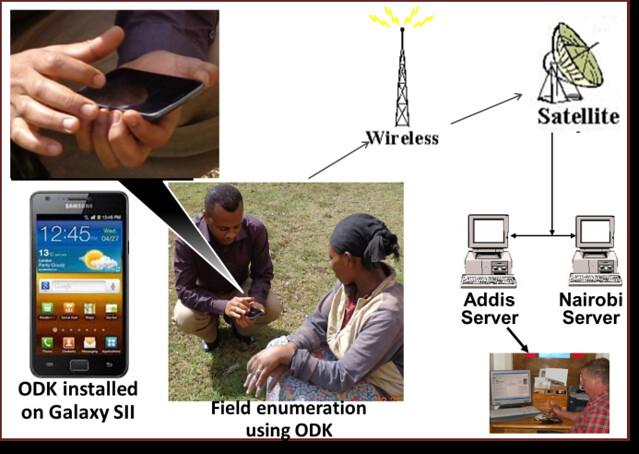
One of the tools introduced in the training was the Open Data Kit (ODK) which is an open-source suite of tools that helps organizations to author, field, and manage mobile data collection solutions. ILRI’s research activities are moving from paper-based data-collection methods to mobile-based options like ODK; therefore there’s a need to ensure that the emerging researchers who support ILRI scientists in the field are up-to-date with these new methodologies.

The combination of affordable, powerful, mobile devices (e.g. phones, tablets) and easy-to-use readily-available (open-source) software has significantly lowered the barriers to electronic-based data-collection. ODK tools are fairly easy to develop & use and help to speed up the processing for getting data ready for analysis. Furthermore these tools have the potential to decrease research costs, particularly in the long run, by using standard tools and databases and reduced cleaning time if pre-validation quality assurance has been included in the tool design.
This is the stuff that takes data collection to a new level, aids in collecting and accessing data, thus moves the cleaning work faster.
Jesse Owino, PhD fellow
The ECRs were also introduced to ILRI’s biorepository popularly known as Azizi which is a Swahili word meaning ‘precious’. ILRI biorepository is a research service unit at ILRI tasked with ensuring safe, secure and efficient storage of biological materials and their related data. The aim is to develop a collaborative network of partners who share their samples and data, by encouraging the use of common protocols and systems, creating a virtual, distributed resource for probing the diversity of African livestock. The unit currently preserves a wide range of biological materials and has over 84,000 materials which are open source and can be widely used by the research community.
Thanks to CapDev and RMG for closing the tech gap between social and physical science through this training. I feel very equipped and ready to develop my first ODK data tool!
Violet Barasa, research assistant
The training was conducted by ILRI’s Research Methods Group (RMG) working closely with ILRI’s Capacity Development Unit (CapDev) and the People and Organizational Development Unit (POD) units. Twenty two participants, including PhD and MSc fellows and early career researchers (research assistants and technicians) attended the workshop.

The course was part of an initiative to provide learning opportunities to graduate fellows and staff that include a blend of a series of “bite-size” modular courses in cross-cutting skills areas, e-learning opportunities, effective mentorship support, evidence and assessment to further enrich the their learning experience at ILRI.

Friday, 21 August 2015

Reflections on CIRCLE Programme: Personal thoughts and experience


By Dr Ifeanyi Ndubuto Nwachukwu, Michael Okpara University of Agriculture, Nigeria

Dr Nwachukwu spent his fellowship year at Kenyatta University, Kenya. After settling back into his home institution, he reflects on his time on the CIRCLE Programme.


The Climate Impact Research Capacity and Leadership Enhancement (CIRCLE) programme was borne out of the need to build the capacity of early career African Researchers in the area of climate change and its local impacts on development. The point of departure from other fellowships lies in CIRCLE’s approach in ensuring overall professional development. A case in point is the introduction of the Researcher Development Framework (RDF) which is a monitoring and evaluation framework for assessing professional development. In addition the fellow has the support of a team of professionals with proven track records as mentors, supervisors, and special advisors The Institutional Strengthening Component of the programme which aims to re-model the development strategies and systems of the fellows’ home institutions is configured to sustain the professional revolution kick.


Coming from the background and tradition where the bulk of academic work rests on the shoulders of junior academics, it is sometimes difficult to plan and execute personal professional development programmes. The tripod of 40:40:20 (40% - teaching; 40% - research and 20% - community service) which characterizes an ideal academic life is predominantly obscured and truncated by the systemic “pull-him-down” syndrome encountered by my class of academics. This, along with academic brain-drain across the continent, helps explain why most of the tertiary institutions in Africa are bottom heavy. My participation in the CIRCLE programme has now reversed the ugly trend by re-awakening my dampened consciousness for professional growth.


In this context, CIRCLE has provided a whole new scholastic milieu which creates a window for rich, rewarding and alien experiences. This has come in the form of a rare, novel opportunity to understudy new systems, structures, practices, cultures, languages etc… while executing my research project in the host institution. Upon arrival in January, I was tasked by my supervisor to develop a quarterly work plan to maximize time-management and also to serve as a monitoring and evaluation framework. Part of the plan was to undertake desk-based research to assess the sectoral effect of climate change in a cross-regional comparative context using time series data alongside my CIRCLE research project.


I subsequently won a book chapter slot in a competitive book project using an abstract derived from the research, the book chapter draft underwent several rigorous reviews. I must confess that the review process was the toughest in my entire academic life. On a happy note, the chapter has been accepted and an honorarium of $2,525 paid. The book titled “Milestones in Climate Compatible Development in Selected Countries of Eastern and Southern Africa” is organized by the Organization for Social Science Research for Eastern and Southern Africa (OSSREA), Ethiopia and supported by Danish International Development Agency (DANIDA).


Within my eight months stay, I have participated in two training workshops and a conference here in Kenya; one was organized by Consortium of Advanced Research Training in Africa (CARTA) for young researchers in conjunction with African Population and Health Research Center (APHRC), Kenya and the University of the Witwaterand (WITS), South Africa. The second was on Didactics, E-learning and Quality Assurance for Integrated Watershed Management (IWM) lecturers and facilitated by Prof. Jenny Day University of Cape Town, South Africa and Dr. Stefan Thiemann (IWM Expert GmbH, Kempten, Germany). The conference was the 2nd Africa Ecosystem Based Adaptation for Food Security (EBAFOSC 2) conference organized by UNEP and held on 30 – 31 July, 2015 in Kenya. EBAFOSC – 2 paraded a good number of high profile researchers within and outside the continent who made very scintillating country specific presentations. I was able to gain greater insights into ecosystem based adaptation approaches and climate change situations in some parts of the continent which I find very useful in my research. The scientific discussion sessions were also very rewarding. The conference ended with the adoption of declaration for Nairobi Action Agenda on Africa’s Ecosystem Based Adaptation for Food Security.


Over the period under review, I have come in contact with a good number of researchers from different parts of the continent who are already collaborating with me on a number of research fronts. By the end of the CIRCLE programme, I hope that my skills and competences would have grown to champion the cause of climate change research in my home institution. The multiplier effect of this alien programme launch would be felt in the quantum and quality of research output emanating from the African continent in line with the vision and expectations of grooming home grown solutions to Africa’s development problems. I am most grateful to the DFID, ACU and AAS for this rare opportunity to be part of the CIRCLE programme.

Tuesday, 11 August 2015

Role of ‘critical research friends’ in mentoring emerging researchers: Reflections from a mentorship workshop

By Joyce Maru, the International Livestock Research Institute (ILRI), Kenya
This post is re-posted with permission thanks to Joyce Maru from The International Livestock Research Institute (ILRI). For the original post, please follow this link.


The International Livestock Research Institute (ILRI)/CGIAR graduate fellowship program provides practical, hands-on mentorship support in well-resourced ILRI research laboratories and facilities in Kenya, Ethiopia and in other countries where ILRI operates.
This hands-on mentoring, usually in periods ranging from six months to three years, is an important component in developing the capacity of emerging developing-world leaders in agricultural research (at MSc, PhDs and postdoc levels). It also supports production of high-quality of research outputs from ILRI.

A key consideration in the graduate fellowship program is the need to understand and respond to the career and capacity needs of research fellows so that the mentoring supports them appropriately in designing and carrying out their work in developing-country contexts.
One of the ways in which ILRI is helping fellows is by giving them access to groups of ‘critical research friends’ made up of various mentoring supervisors. According to Costa and Kallick (1993) a critical friend is ‘a trusted person who asks provocative questions, provides data to be examined through another lens, and offers critique of a person’s work as a friend.’ The term is mostly applied in critical pedagogy and in contexts of mentoring and coaching to refer to support provided to individuals and groups undertaking a certain project. In ILRI’s context, graduate fellows or early-career researchers could, therefore, refer to their mentoring supervisors as their critical research friends.

I recently attended a training of trainers (ToT) workshop on mentorship in Johannesburg, South Africa, which was conducted by Vitae UK and organized through the CIRCLE fellowship program. In this blog post, I reflect on the key learnings I derived from the workshop and how I think they can be used to enhance ILRI’s approach to mentorship.
As a starting point, it is vital to clarify the different terminologies that are loosely and interchangeably used to refer to ‘mentorship support’ in research. For example, it is important to clarify whether when using that term, we mean ‘graduate fellow supervisors, mentoring supervisors, supervisors, line managers or coaches.

I prefer the term ‘critical research friend’ or ‘mentoring supervisor’ because, for example in ILRI’s case, graduate fellow supervisors often assume a hybrid role of mentoring graduate fellows although other informal mentoring relationships may emerge stemming from friendships with work colleagues.
Irrespective of approach used, however, the important question is what makes a good mentor? Is it correct to assume that line management relationships automatically become mentoring relationships? And moreover, how can we encourage line manages to take a mentoring approach to supervision? 


Qualities of a good mentor

During group discussions at the Johannesburg workshop, a mentor was portrayed as one with an ideal personality and demonstrating a long wish list of qualities, behaviour and competencies, but the top five qualities that I think a critical research friend should demonstrate include:
  • Generosity of spirit – mentoring is ingrained in their value system and they are always willing to share skills, knowledge and expertise with their mentees i.e. they are available as a resource and a sounding board;
  • https://www.blogger.com/blogger.g?blogID=1536403954582100997#editor/target=post;postID=47371528094188807;onPublishedMenu=posts;onClosedMenu=posts;postNum=0;src=linkThey always encourage and inspire their mentees to learn, improve and conduct cutting-edge research withintegrity;
  • Self-reflective and values ongoing learning and growth in the field;
  • Helps the mentees to set and meet ongoing personal and professional development Mentors continuously help their mentees to develop by highlighting, through constructive feedback, the areas that need improvement and by objectively focusing on the mentee’s behaviour and not their character;
  • Well respected and admired by colleagues and employees in all levels of the organization.

Making ILRI a centre of excellence in mentoring emerging/early career researcher

If we aspire to become a centre of excellent in mentoring and supporting emerging career researchers, some important considerations and reflections could include:
  • How does the mentorship scheme align with the strategic direction of the organization?
  • How do we identify and support those who have the values and qualities to become mentors?
  • Is there a strategic plan, leadership and champions for mentoring?
  • Is there a clear, formal policy and guidelines on mentorship? (Defined roles of mentor/mentee, implementation plan, mentoring support, evaluation and feedback mechanism);
  • Is it sustainable?
  • Is it a coordinated approach? Who leads the initiative?
  • How do we continue to develop mentoring skills and capabilities?
  • Can we demonstrate output and impact?
  • How do we reward and incentivize best practice?
  • How do we institutionally support good mentors with integrity and without exploitation?
  • How do we set boundaries for the institution, the mentor and the mentees?
  • How do we create a critical mass of mentors?
  • What alternative models can we create for a mentoring experience when resources are scarce?
  • Is it inclusive? (Gender sensitive, interdisciplinary, diversity);
Here a question can be posed on the extent of the need to have, in place, a unified/formalized mentoring system that allows equality of access and is quality assured. I think that quality assurance underpins effective mentoring relationships and, therefore, there is need for more systematic and constructive support and mentoring for emerging research leaders.
 
Joyce Maru is a capacity development officer at ILRI.

Friday, 7 August 2015

Shifting from the Binary: Analyzing Climate Change Adaptation through the Intersectionality Lens

By Catherine Mungai, International Livestock Research Institute and Mercy Derkyi, University of Energy and Natural Resources 
Cohort 1 CIRCLE Visiting Fellows

Catherine Mungai (left) and Mercy Derkyi (right)

Understanding the diversities and interactions in men and women groups is the concept of intersectionality’
It is now widely recognized that the impacts of climate change and variability are not uniformly felt amongst communities in Africa. For example, based on their roles and responsibilities, female farmers and male farmers have differentiated vulnerabilities to climate change and consequently develop differentiated coping and adaptation strategies. However, it is important to recognize that addressing climate change impacts goes beyond whether one is a female or a male.  For a long time now, the issue of gender in climate change has been addressed through the binary lens i.e. male vis a vis female. While using this lens has brought to the fore that adaptation and mitigation strategies should address issues of equity, it is now increasingly becoming apparent that there are other dimensions such as religion, ethnicity, age, race, educational level and socio-economic levels that need to be considered during the development and implementation of adaptation and mitigation strategies. This was the main message emerging from the presentations made by Mercy Derkyi and Catherine Mungai during the Gender mainstreaming session at the 4th Climate Change and Population Conference on Africa (CC POP-Ghana 2015). The conference which was held at the University of Ghana from 29 - 31 July 2015, created an ideal platform to share ongoing research on climate change in Africa ahead of the upcoming 21st session of the Conference of the Parties to the United Nations Framework Convention on Climate Change (COP 21). Dr Derkyi and Ms Mungai were supported to attend the conference as part of their Climate Impact Research Capacity and Leadership Enhancement in Sub-Saharan Africa (CIRCLE) fellowship programme.


Experiences from the forest and agriculture sectors in Ghana

During her presentation on “Exploring Gender, Climate Change Vulnerability and Adaptive Capacity through an Intersectionality Lens,” on behalf of co-authors, Mercy emphasized the need for using an intersectionality lens to analyze climate change adaptation in the forest and agriculture sectors.  She pointed out that in most rural settings, the roles and responsibilities of gender are socially and culturally defined and these determine how communities experience and respond to climate change and variability. She further added that, disaggregated data by gender and more specifically its intersection with other social groups like class, age and wealth in Ghana are scarce. Most studies tend to focus on single variable such as gender thus projecting it as binary and such focus obscures the fact that gender takes meaning from its intersections with other identities. Through a literature review, she explains what intersectionality is and why it is needed; principles governing it and comparative analysis with other approaches; Gender as intersectionality and empirical evidence; Intersectionality in climate issues and steps to integrate intersectionality in academic research. Quoting Hankivsky (2014) she said People’s lives are multi-dimensional and complex thus shaped by different factors and social dynamics operating together’. She concludes that Intersectionality may not be a ‘’cure for all’’ but if explicitly oriented, it transforms, build coalitions among different groups and work towards social justice especially among gender and intersecting categories in the era of climate change.

Experiences on Climate-Smart Agriculture from Nyando, Kenya

Focusing on the agricultural sector, Catherine gave a presentation under the topic “Engendering Climate-Smart Agricultural Innovations in Kenya.” In her presentation, Catherine focused on the use of the intersectionality lens to analyze the uptake of climate-smart agricultural (CSA) technologies and practices in Nyando, Kenya. Catherine pointed out that the adoption of CSA, supported by enabling frameworks and institutions, is crucial to transforming African agriculture into a long-term and sustainable system. She further added that studies undertaken amongst farmers in Africa have shown that gender relations determine the ways in which the changing climate is experienced by small holder farmers. However, she also emphasized that not all women (nor all men) are the same in that they do not all have the same roles, levels of access to, and control over, resources or power in decision-making, since gender norms are also related to race, class, ethnicity, religion, and age. Using Nyando as a case study, emerging results from her studies reveal that there are differences in the uptake of climate-smart agricultural technologies and practices between different categories of men and women farmers. Nyando in Kisumu, Kenya is one of the learning sites where ongoing research on climate-smart agricultural technologies and practices, is being undertaken by the CGIAR Research Program on Climate Change, Agriculture and Food Security (CCAFS).

As a way forward both presenters emphasized the need to use the intersectionality lens to enhance the understanding of the synergies between gender and climate change in order to ensure that polices, strategies and plans on adaptation and mitigation to climate change yield equitable results for communities.

Please click on the following links to access the presentations:
This blog story was written by :

Catherine Mungai, Post-Masters Fellow
Home institution: International Livestock Research Institute/The CGIAR Research Programme on Climate Change, Agriculture and Food Security
Host institution: University of Nairobi/ Institute of Climate Change and Adaptation

And

Mercy Afua Adutwumwaa Derkyi (PhD), Post-Doctoral Fellow
Home Institution: University of Energy and Natural Resources
Host Institution: University of Ghana

Thursday, 30 July 2015

Building Visibility and Global Relevance through International Networks

Dr Abiodun Momodu, Obefemi Awolowo University, Nigeria
Cohort 1 CIRCLE Visiting Fellow

Abiodun Momodu reflects on his participation at the System Dynamics Summer School at Worcester Polytechnic Institute, Worcester, Massachusetts.

This post was originally shared on 18th July, 2015 on the CIRCLE forum for CVFs. 


Its great to be a 1st Cohort CIRCLE Visiting Fellow. In the last couple of days, I have been part of a 40 member Summer School of the System Dynamics Society, held at Worcester Polytechnic Institute, Worcester, Massachusetts, USA from 15 to 17 July 2015. Participants were from various countries - 13 in all (including USA, France, UK, Australia, Italy, Nigeria, Kenya, Cameroun (Canadian), Mexico, South Africa, Pakistan, Indonesia, Oman) - were in attendance. It was a great opportunity of networking and interacting with renowned experts in the field. One of the Facilitators of the Summer School, Andy Ford has been in practice since 1967. The least experienced amongst the Facilitators of the Summer School had fifteen years of consistent, well funded practice in the field of System Dynamics. It is a good thing that there is CIRCLE; but the School made me realise that for anyone to be visible in any field of research, there has to dogged practice in that endeavour. Apart from meeting experts I have ever wished to meet in the field at the Summer School, I was able to also interact with those from Africa with the aim of strengthening our collaborative efforts. Hopefully, a Kenya-Nigeria Collaboration will blossom in the years ahead in the areas of SD practices as a methodology and application to examining systems in their entirety, including climate change, sustainable development, health system etc.

In one of the final presentations, there was a blend of models used for the analysis. This was well funded by USAID on climate change related study on Limpopo Region in South Africa.

Now the African Chapter holds an annual Conference in Kenya every January. New members are welcome to join. And in case anyone is interested in know the basics of the System Dynamics for their anaylsis, there is a training slated for University of Ibadan later this year.

I believe CIRCLE is a good forum for all participants to grasp what it takes to be globally relevant and become visible in research and the academia. Conference follows in the couple of days ahead!

Thank you DFID. Thank you ACU. Thank you AAS. I believe it is the beginning. More will come.

Abiodun Momodu, KNUST-CERD

More about Abiodun, his research and the research of other CVFs involved in the CIRCLE programme can be found here: https://www.acu.ac.uk/focus-areas/early-careers/circle/cohort-1-CVF

Wednesday, 29 July 2015

CIRCLE at the 4th Climate Change and Population Conference on Africa

Dr Benjamin Gyampoh from the African Academy of Sciences is keeping us updated from the 4th CLIMATE CHANGE AND POPULATION CONFERENCE ON AFRICA, 29 – 31, July, 2015, where we are pleased to have a strong CIRCLE presence.

CIRCLE Visiting Fellows at the conference, from the left: Cathy, Celestine, Batholomew, Divine and Philip

Dr Gyampoh will be making a presentation on CIRCLE titled: “CIRCLE: developing human capital and increasing knowledge for management of Climate Impacts”

6 CVFs are also presenting their work at this conference. They are:
  1. Mercy Derkyi:  Exploring Gender, Climate Change Vulnerability and Adaptive Capacity through an Intersectionality Lens: Derkyi, M; Adiku, S, Akwen, N, Dovie, D ,Codjoe, S , Nelson, V and E. Awuah
  2. Phillip Antwi-Agyei: Participatory mapping of multiple stressors contributing to vulnerability across scales in the Savannah zone of Ghana.  P. Antwi-Agyei, S.N.Codjoe; S. Adiku; B.D.Dovie
  3. Divine Odame Appiah: Smallholder Farmers’ On-Farm Adaptation to Climate Variability in the Bosomtwe District of Ghana. Divine Odame Appiah and Sampson Yamba
  4. Cathy Mungai: Does Gender Influence the Uptake of Climate-Smart Agriculture? Experiences from Nyando, Kenya. Catherine Mungai and Mary Nyasimi
  5. Olga Laiza Kupika:  Embracing local ecological knowledge in climate change adaptation in Mukwichi communal land, Zimbabwe. Olga Laiza
  6. Batholomew Aleke: ICT adoption in the wildlife sector: Implications for climate change adaptation and disaster risk reduction in Africa. Bartholomew Ituma Aleke, Kupika Olga L.

Celestine Afiukwa is also attending the conference but not making a presentation.