Showing posts with label ISP. Show all posts

Tuesday, 28 August 2018

Researcher Open Day/Agriculture Stakeholders Forum/Exhibition of Agricultural Technologies, 29th March 2018, Michael Okpara University of Agriculture, Umudike, Nigeria

by Professor Philippa C. Ojimelukwe, Michael Okpara University of Agriculture, Umudike, Nigeria
CIRCLE ISP Coordinator

The Michael Okpara University of Agriculture and the CIRCLE Implementation Fund co-funded the university to carry out three activities as part of their institutional strengthening programme. These activities have conducted training in research ethics, scientific writing and communication skills, and provided a forum for researcher-stakeholder collaboration. Here, Professor Philippa C. Ojimelukwe shares with us her thoughts on the Researcher Open Day held in March 2018 which strengthened communication between researchers and research stakeholders. 


Have you ever wondered why so much research work is carried out in universities and other tertiary institutions? Research projects are undertaken by undergraduate students, postgraduate students and the researchers/lecturers themselves. Imagine the number of research projects found in the libraries of universities and other higher institutions - a lot of information “sitting comfortably” on the shelves. Journal articles, conference proceedings and books are written in highly technical language which although they are very important to the academic community, means very little to the general populace. 


In many higher institutions found in developing countries, there is no relationship between the institution, the public, and the private sector; while information and innovations required to move society forwards sits on the shelves, communities and private sector grope in darkness for the same information; the missing link is a communication gap between the researchers and end users of research. The CIRCLE Institutional Strengthening Programme (ISP) drew our attention to this essential component of relating with the public by extending research results to end users in a practical manner. We realized that the research cycle is incomplete unless research results and innovations are extended to end users. The beauty of research is better appreciated when the products of research are used to solve societal problems and end users are benefitting from research endeavours. Much of our research information never gets to the end user. Innovation and development should be guided by the outcomes of research in order to achieve sustainability.


Through generous support from the CIRCLE Implementation Fund and the Association of Commonwealth Universities (ACU), Michael Okpara University of Agriculture, Umudike organized a researcher Open Day Forum on the 29th of March, 2018. The major objectives of the workshop were:

  • To create an enabling environment for interaction between stakeholders in agriculture, the private sector and the MOUAU research team.
  • To acquaint farmers and other stakeholders with relevant improved agricultural technologies available in the university. 
  • To develop participatory strategies and intervention measures that will enhance the capability of farmers for improved agricultural production and income generation. 


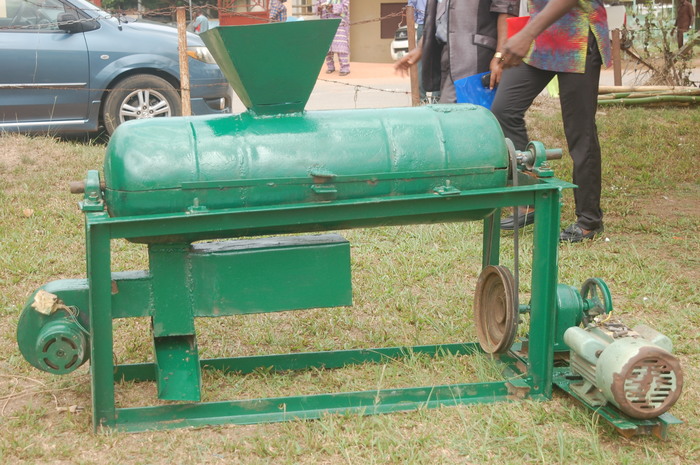
Researchers were invited to discuss their research activities with potential end users and show case products of their research. Products of agricultural research were exhibited. Farmers also came with their own products for exhibition.


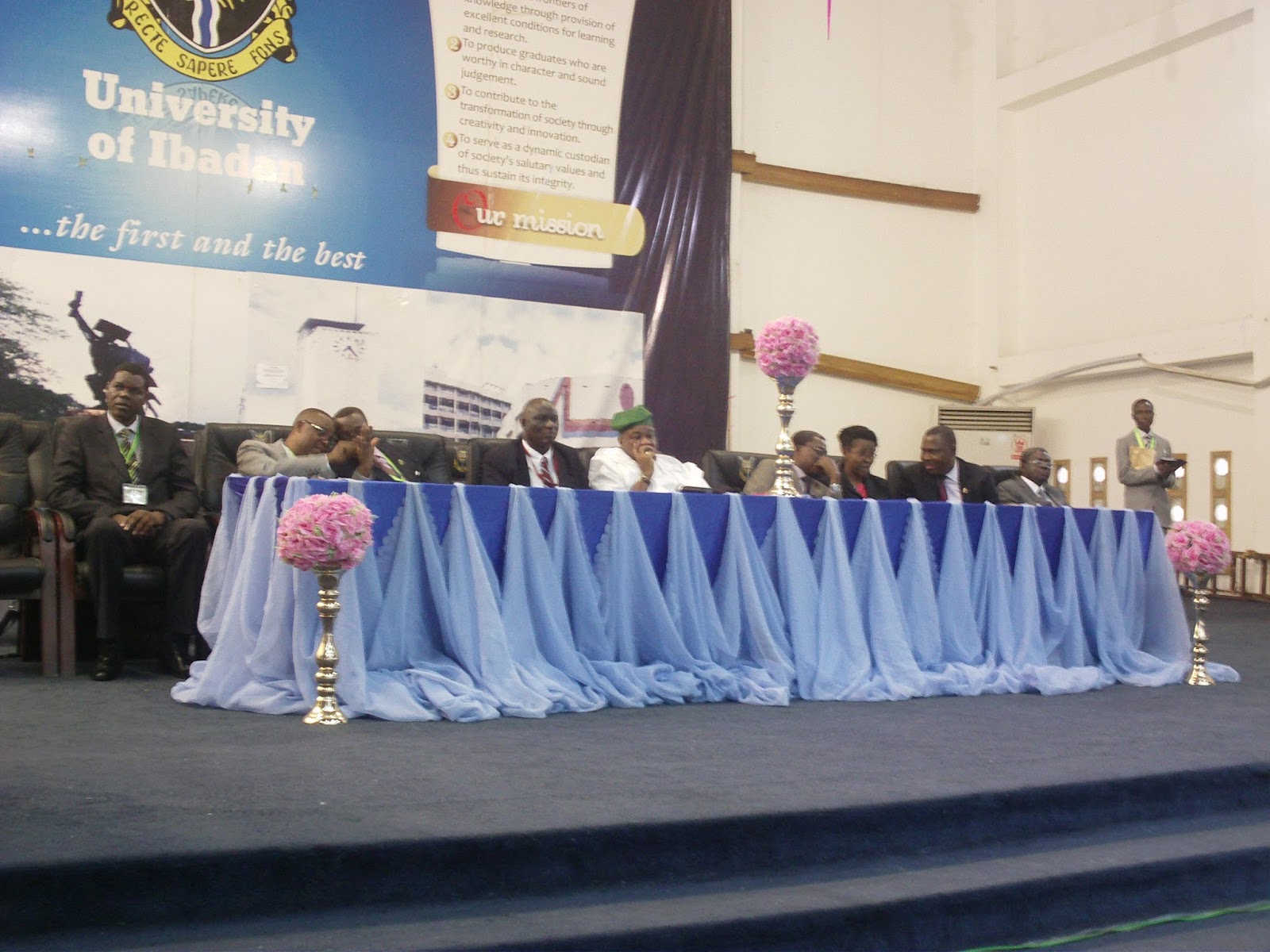
The turnout for this event was impressive. People from all walks of life were there for the Open Day Forum. Traditional rulers, farmers, civil servants, private enterprises and entrepreneurs were amply represented. After the opening ceremonies, there was a very interesting interactive session between research end users and the researchers themselves. Leading researchers in the university had a lot of questions to answer; a lot of clarifications to make and a lot of lessons to learn from the general public. The exhibition proper took place after the discussion session. Colleges and units in the university showcased the products of their research activities and interacted freely with the public. The keynote address was delivered by retired Professor C.C. Chinaka. At the end of the forum, non-university stakeholders received a “certificate of participation”.


It was an opportunity for researchers to prove their worth. It also sensitized researchers about the expectations of the society from them. It offered an opportunity for researchers to re-orient their research endeavours to tangible societal problems based on felt needs. On the part of stakeholders and research product end users, many of them were amazed at the technologies, products and innovations that were available at Michael Okpara University of Agriculture Umudike, Abia State, Nigeria. Many stakeholders from the public sector admitted that their perception of universities had never gone beyond an institution where you can send your ward to obtain a degree and qualify for “a white collar job”. Many of the stakeholders indicated willingness to collaborate with the university on different areas of research based on interest. Collaborations and linkages were established. It was clear that a symbiotic relationship between researchers in the university and the public was needed to drive sustainable development. The need for a structural platform for University-private sector mutual interaction has been established by this workshop and cannot be over-emphasized.

For more inquiries please contact:
Prof. P.C. Ojimelukwe (CIRCLE ISP Coordinator) ojimelukwe.philippa@mouau.edu.ng

Tuesday, 8 August 2017

CIRCLE Institutional Case Study: MOUAU

By  Prof. Phillippa Ojimelukwe, Michael Okpara University of Agriculture Umudike (MOUAU), Nigeria

When I saw the advertisement for the CIRCLE programme, I had little confidence that we would succeed in becoming a Home institution. I was uncertain we would be able to compete favourably with other well-established institutions; I also thought that the funders would be sceptical of lesser known institutions. Thankfully my fears were unfounded and the CIRCLE programme has been a revolutionary experience for Michael Okpara University of Agriculture, Umudike, Nigeria. We have benefitted both from the fellowship programme (with four fellows selected from MOUA) and the Institutional Strengthening Programme (ISP).  

The ISP has been transformative for our institution. We started with a detailed analysis of our institutional gaps and weaknesses. We aligned this with our university’s mandate - to lead the frontiers of research in agriculture for national development in a sustainable manner and to train highly rated graduates in agricultural disciplines equipped with entrepreneurship skills. 

The gap analysis was a real “eye opener” for us and helped us to identify and prioritise a number of areas that we wanted to address. We prioritised our needs and focused on the following areas for our action plan:
  • Developing an induction programme for new staff;
  • Creating a formal researcher's forum;
  • Improving the structure of our career development and continuing professional development frameworks;
  • Developing line management and research management training for research managers in the university;
  • Creating a formal mentoring programme;
  • Establishing a work ethics and a research ethics committee;
  • Improving poor connectivity and low bandwidth;
  • Developing a Researcher Development Framework (RDF) lens, to establish priorities for researcher support within our institution.
Induction programme banner

We formulated our action plan and started working with the university management to implement the actions. Despite financial constraints, we have been able to successfully implement a number of initiatives. In October 2016 we conducted a maiden induction of new staff at the university with the generous support of university management. The Directorate of Research instituted a formal mentoring scheme in September, 2015 and is monitoring publications (PUB); work life balance (W/L); attendance to training and conferences (C/T); efforts at writing of proposals (PRO); and personal improvement (PI) of the mentees. A major source of challenge to the mentees is frustrations over unsuccessful attempts at proposals, publications, conference and training grants as well as poor internet access. Another key challenge is establishing a healthy work-life balance. This scheme has been made sustainable because at each monitoring date, new mentors and mentees are recruited. New mentees establish their own “purpose road map” and are familiarised with the Researcher Development framework as a tool to help them navigate their career pathway. During a meeting held in May 2017, mentees agreed to hold monthly meetings to improve their use of the RDF planner, learn about new scientific skills and opportunities and discuss their professional development. These monthly meetings will seek to maintain the momentum of career and professional development for the early career researchers in the university. 

Induction registration

Staff induction

Staff induction

Other aspects of the ISP were integrated into a policy document endorsed by a specially convened council committee of professors and presented to the senate.  The senate has studied and adopted this paper and we are set for its implementation. In addition to the induction and mentoring programmes we have carved out a career development unit and a human resource unit from the existing registry. Personnel in the registry have received training in the functions of HR management and career development. In the longer-term we plan to develop a fully-fledged Human Resource and Career Development Centre. The university has also established a work ethics committee and a Directorate of Research, which is expected to raise a memo on the constitution of a university Research Ethics Committee.  Although funding remains a daunting challenge, we continue to make efforts in-house to progress with a worthwhile objective. 

All of our efforts have been assisted by the input of CIRCLE through their series of online webinars, dedicated consultancy, networking activities and, critically, through the workshops, which have provided enormous capacity building support to senior staff at MOUAU. At the most recent workshop for mentors and supervisors we used the sessions with John Morton to identify research gaps in the field of climate change as well as ways of more effectively conducting research into climate change through inter-disciplinary research teams. There were also some enlightening discussions around dissemination and uptake of research through publication and engagement with stakeholder and policy-makers. The Vitae led sessions of the workshop focussed more on the skills needed to develop and nurture the next generation of researchers. Various dimensions were covered from effective proposal-writing skills to good practice in supervision and mentoring, we also had some session on how to use the RDF to build Researcher Development plans and conduct a research environment audit to examine and shape the organisational culture in place to empower researchers.  

Monthly RDF meetings

The experience of participating in CIRCLE has been an effective and systematic capacity building mechanism to incorporate global best practices into our institutions. Our unreserved thanks to DFID, ACU, AAS, Greenwich University and VITAE!


Tuesday, 13 September 2016

Supporting the research leaders of the future at the ACU Conference of University Leaders, 2016

In partnership with Vice-Chancellors' Ghana, The ACU Conference of University Leaders 2016 was hosted by the ACU in July this year. The main focus of the event was to bring together senior university staff to ‘debate key issues in higher education and explore shared solutions with a diverse range of international colleagues’. While the majority of attendees at the event were therefore high ranking university officials, one of the key themes under debate was how the next generation of university leaders could best be supported. I was privileged to attend the event and to jointly present, together with Professor Graham Furniss, the recently published ACU-British Academy report, ‘The next generation: ideas and experience in African researcher support’. We shared the panel with two early career researchers - Herine Otieno-Menya and Dr Olawale Olayide - also presenting their ideas and experience on support for early career researchers. Andrea Johnson from the Carnegie Corporation of New York, USA, provided the response to our presentations.

It was interesting to consider different forms of support for early career researchers and how this could be maximised to be most effective. There was also useful feedback from Ms Johnson on The Next Generation report, some of which we have already been considering for further development of the research and some of which could also be useful cross-cutting themes for much work with universities. For example, thinking of universities as systems (systems thinking is a topic currently – and rightly –hugely popular in the international development sector at the moment) and how support for early career researchers sits in that system. A topic touched upon in the report was whether it is more effective to approach change within this system from the faculty level, then involve institutional leadership, or vice versa. Perhaps this is best determined based on the type of institution, its culture and the particular entry point for the programme of support.

Again, reflecting the need to understand institutional context, the varying needs and objectives of researchers in different disciplines was highlighted (for example, in some disciplines the quantity of publications may be more important, for some it may be the use of cutting edge technology and in others ensuring the impact of research on policy may be more important). There were further questions around where support should be directed (also a topic we touched upon in researching the report). Should we be targeting just the most promising research or raising standards more broadly? What about teacher training as opposed to researcher training? The report made reference to the use of online learning, but perhaps there is the potential to also consider other modes of learning, such as split-site PhDs or PhDs by distance. Many of these points relate back to a key concept emphasised in the report: it is vital that early career researcher support is shaped by, and embedded in, the priorities of the academics (junior and senior), faculties and broader institutional and societal objectives. However, higher education institutes are, indeed, complex systems with complex needs so to do this effectively will need careful consideration and reflection.
Tawakalitu Bola Onifade, Caroline Moss, Victoria Tanimonure, Eunice Thomas and other delegates
In addition to sharing the panel with Dr Olayide, I was also very pleased to catch up with a number of early career researchers from the CIRCLE programme. Funding was very gratefully received from the National Research Foundation, South Africa, for several CIRCLE fellows to attend the event. The fellows made full use of the opportunity to join various sessions of interest and to broaden their networks. Several sent their gratitude and shared some of their highlights and reflections, some excerpts of which are captured below:


Dr Amos Apraku shared his appreciation of the measure of support for early career researchers and higher education in Africa:

It was gratifying to note governments, university leaderships and the Commonwealth as a political entity continue to place education and research at the centre of development in less-developed countries, particularly in Africa. Similarly, various funding institutions and scholarship awarding bodies are committed to this gesture (prioritisation of research and development) by continually making funding available to emerging  academics from poor countries with special focus on women. To whom much is given, much is expected; beneficiaries of various scholarships and research funding and their institutions are therefore expected to give back to society in the form of using research and technology to develop societies.
Amos Apraku, Caroline Moss and Benson Iweriebor
Dr Benson Iweriebor reflected on a number of the sessions of the conference as well as his first experience visiting Ghana and the opportunity to engage with different groups at the event:

The trip to Ghana was very eventful as it was my first time visiting that country. The conference was well organised and attended by eminent scholars from across Commonwealth nations from the Caribbean, to Asia, to Canada, Australia, Fiji, and Africa. I was privileged to meet many erudite scholars who were university administrators… I was also able to attend concurrent sessions throughout the conference: ‘Funding trends and opportunities’ and ‘Developing the new generation’ on the first day which culminated in a welcome party organised by the Vice Chancellor of the University of Ghana, Legon. It was an opportunity to unwind and meet fellow attendees and we were entertained by the university’s cultural group where people danced to the rhythm of drums. Oh, I loved the way the delegates from Sri Lanka danced enthusiastically to the beating of the drums.

The second day of the conference… ended with a plenary entitled ‘Addressing historical injustice: from Rhodes to reparations’ with Profs Sir Hilary Beckles (VC, University of the West Indies) and Prof Adam Habib (VC, University of the Witwatersrand). Both talked about their experiences as university administrators on the issues of the slave trade and need for reparation following student protests to have the Rhodes statue in South Africa removed. To cap the day’s events, a gala dinner was held for delegates at the State House with The Rt Hon Patricia Scotland QC being the guest speaker. Delegates were treated to good music and a sumptuous dinner. It just felt like being home in Nigeria with my colleagues Dr Eunice Thomas, Apraku Amos, Bola Onifade and Victoria Tanimonure. I miss these great and amazing souls and thank CIRCLE and the NRF for giving me the possibility to meet them all.


Victoria Tanimonure shared how several sessions at the conference highlighted the importance of research uptake as part of the research process:

The concurrent session that benefitted me most was on the research uptake ‘Ensuring that research benefits society’. There are many research outputs wasting away on the shelf without transferring them to appropriate stakeholders that could benefit from them, thereby bringing university research into use. This has been my concern over the years. Sometimes I asked myself the usefulness of all this research work - are they just for our promotion and CVs? I think it is high time we did things differently in this regard. One of the speakers who shared her experience on research uptake from her university’s perspective mentioned that they have put in place in her institution an opportunity for research uptake starting from the departmental level, then to the faculty and institutional levels. I felt strongly in my heart that I can pioneer that from my department and faculty as soon as I return to my institution. To achieve this, I found the handbook by DRUSSA very helpful.

Also, the conference debate was really an interesting one and, to me, it still boiled down to the issue of research uptake: how society can benefit immensely from universities as they rise up to the task of social responsibilities. I am sure we still have a long way to go in Africa, and Nigeria in particular, but a journey of a thousand miles begins with a step. We will get there. 


Dr Eunice Thomas shared how she had benefited from attending various sessions at the conference:

On the first day of the Programme, after the opening session and the keynote address by Kofi Annan, I attended a concurrent session where speakers shared with us on funding trends and opportunities in the UK, Sweden and USA. This was an eye-opener to various funding bodies and how to access them… In the afternoon, speakers talked about various aspects of development for upcoming researchers and the knowledge I garnered will be of a great benefit to me in my career.

The second day of the conference witnessed many sections.  Prof Crispus Kiamba talked about the Commonwealth Scholarship and Fellowship Plan (CSFP) taskforce. He highlighted the current goals of CSFP, their operations and the endowment fund set up.  That same day, in the afternoon barriers and opportunities in Africa were discussed by 3 speakers.  Later, Accessibility and the various norms in selected universities were discussed.  I now have a better understanding of the operations of the Commonwealth Scholarship. I am most grateful to the NRF for sponsoring me for this conference. I must say that you have equipped me with long term tools that will contribute immensely to my success in making a change in Africa in my career. It is a great privilege you have given me to interact with contacts from various fields all over the world.  Thank you once again. 

Friday, 11 September 2015

Outcomes of the 6th Annual Ibadan Sustainable Development Summit (ISDS) 2015


Preamble

2015 will see the replacement of the Millenium Development Goals with the Sustainable Development Goals (SDGs). It is therefore apposite to consider promises that the SDGs hold for overcoming the various development challenges in Africa. Africa cannot afford to be left behind in the on-going global development agenda setting. The ensuing SDGs, therefore, offer another opportunity for Africa to be more proactive in ensuring sustainable development in the continent as well as progressive transformation of economies and societies. Considering the disparate achievements of many African countries in the soon to be concluded MDGs, the organisers of the 6th annual Ibadan Sustainable Development Summit (ISDS) considered it apt to bring to the fore the level of preparedness or otherwise of the continent and what lessons it has learnt from the MDGs, as well as the expected roles from numerous stakeholders in the sustainable development spectrum.

The Organization of the Summit, Participation, Paper Presentations and Publications

The summit was organised by the University of Ibadan Centre for Sustainable Development (UI-CESDEV) in collaboration with the African Sustainable Development Network (ASUDNET) and Sustainable Development Solutions Network- Nigeria (NSDSN). It was held during 23 – 28 August, 2015. The theme for the summit was The Post-2015 Sustainable Development Agenda: Whither Africa?


About 230 people from 10 countries in Africa (Ghana, The Gambia, Kenya, Ethiopia, South Africa, Nigeria) and Europe (Italy, France, Netherlands, United Kingdom) participated at the summit. There were also representatives of Governments (including high-level delegation from the Gambia) as well as Non-Governmental Orgranisations (including the Nigerian Network of NGOs), Students and Alumni Associations. Young scholars and researchers presented papers on a range of sustainable development issues at the summit. There were two keynote addresses by Professor Godwell Nhamo of the University of South Africa (UNISA), a CIRCLE supervisor,  and Ambassador Oluseyi Onafowokan, the Nigerian High Commissioner to Ghana. 11 plenary sessions based on the sub-themes of the summit were led by seasoned scholars. A total of 67 technical paper presentations were made. The plenary papers will be published in the summit proceedings while authors of the technical papers are advised to send the revised papers for consideration and publication in the African Journal of Sustainable Development (AJSD) (http://www.ajol.info/index.php/ajsd).

Formation of Research and Working Groups

For the implementation of the SDGs, the meeting grouped the SDGs by similarity and complementarity, and proposed the following five research and working groups for the purpose of driving research, advocacy and implementation of the goals. The summit therefore, set up five research and working groups around the Sustainable Development Goals as follows:

Group 1: Goal 1: End poverty in all its forms everywhere; Goal 2: End hunger, achieve food security and improved nutrition, and promote sustainable agriculture; Goal 3: Ensure healthy lives and promote well-being for all at all ages; and Goal 8: Promote sustained, inclusive and sustainable economic growth, full and productive employment and decent work for all.

Group 2: Goal 4: Ensure inclusive and equitable quality education and promote life-long learning opportunities for all; and Goal 5: Achieve gender equality and empower all women and girls

Group 3: Goal 9: Build resilient infrastructure, promote inclusive and sustainable industrialization and foster innovation; Goal 11: Make cities and human settlements inclusive, safe, resilient and sustainable; Goal 12: Ensure sustainable consumption and production patterns; Goal 16: Promote peaceful and inclusive societies for sustainable development, provide access to justice for all and build effective, accountable and inclusive institutions at all levels.

Group 4: Goal 6: Ensure availability and sustainable management of water and sanitation for all; Goal 7: Ensure access to affordable, reliable, sustainable, and modern energy for all; Goal 13: Take urgent action to combat climate change and its impacts; Goal 14: Conserve and sustainably use the oceans, seas and marine resources for sustainable; Development; Goal 15: Protect, restore and promote sustainable use of terrestrial ecosystems, sustainably manage forests, combat desertification, and halt and reverse land degradation and halt biodiversity loss.

Group 5: Goal 10: Reduce inequality within and among countries; Goal 17: Strengthen the means of implementation and revitalize the global partnership for sustainable development

Membership of the research and working groups comprises representatives from the academia, government and non-governmental organisations and they cut across institutions, disciplines and universities. Others are encouraged to join. The groups will be expected to compete for grants, do advocacy and enlightenment, regarding the SDGs. Several participants in the groups are also involved in the CIRCLE programme, including Prof Godwell Nhamo, from the University of South Africa; Prof Labode Popoola, from the University of Ibadan; Dr Olawale Olayide from the University of Ibadan and Dr Divine Appiah, a CIRCLE Visiting Fellow currently hosted at the University of Ibadan.

Need for Collaboration

Participants emphasized the need to actualize the important goal of partnership/collaboration as key to achieving the other goals. It therefore, resolved to sustain the unity of purpose demonstrated at the meeting by the key stakeholders from the civil service, universities, research centres, NGOs, students, and the private sector. The universities in particular, were challenged to take the leadership position in the implementation process, with government, providing the needed support. The meeting also highlighted the steps taken towards actualizing a pan-Africa partnership towards achieving the SDGs by Gambian President Yahya A.J.J. Jammeh’s  Pan-African commitment to Sustainable Development and support for an annual Ibadan Sustainable Development Summit. The Gambia President sent a powerful delegation of nine senior members in his government comprising a junior minister, permanent secretaries, Director General, and Special Assistants in the Presidency. This was viewed as exemplary, for which other African heads of government should emulate in subsequent summits.

Conclusion and Next Steps

The theme of the summit was very timely, as the summit offered a veritable platform on current debates on the sustainable development goals and underscored the role of Africa in the processes and expectations of implementation frameworks. The research and working groups are tasked with developing proposals and strategies for domesticating the Sustainable Development Goals for Africa, especially the ECOWAS region. They would also sustain the collaboration among the academia, NGOs, PSOs and governments in Africa. International support and collaboration were also emphasized as germane to achieving the SDGs. The seventh ISDS will take place in August 2016 and the theme will be determined in due course.

Labode Popoola
Director, CESDEV & Co-Director, SDSN-Nigeria

Olawale Olayide
CIRCLE Post-Doctoral Visiting Research Fellow, Kwame Nkrumah University of Science and Technology, Research Fellow & Coordinator, EPNARP,  CESDEV, University of Ibadan

For and on behalf of the Organisers

Friday, 4 September 2015

ILRI emerging career researchers learn to use ‘paperless’ data collection techniques

By Joyce Maru from The International Livestock Research Institute (ILRI), Kenya

This post is re-posted with permission thanks to Joyce Maru from The International Livestock Research Institute (ILRI). For the original post, please follow this link.

Emerging career researchers (ECRs) at the International Livestock Research Institute (ILRI) were recently trained to better collect, organize and manage the data they generate during their day-to-day research activities, starting from data collection in the lab or field through to publishing of research results and archiving.


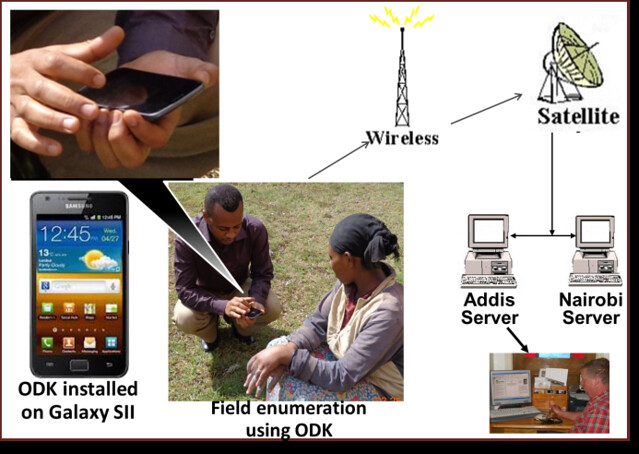
Using the Open Data Kit at ILRI Ethiopia

One of the tools introduced in the training was the Open Data Kit (ODK) which is an open-source suite of tools that helps organizations to author, field, and manage mobile data collection solutions. ILRI’s research activities are moving from paper-based data-collection methods to mobile-based options like ODK; therefore there’s a need to ensure that the emerging researchers who support ILRI scientists in the field are up-to-date with these new methodologies.

The combination of affordable, powerful, mobile devices (e.g. phones, tablets) and easy-to-use readily-available (open-source) software has significantly lowered the barriers to electronic-based data-collection. ODK tools are fairly easy to develop & use and help to speed up the processing for getting data ready for analysis. Furthermore these tools have the potential to decrease research costs, particularly in the long run, by using standard tools and databases and reduced cleaning time if pre-validation quality assurance has been included in the tool design.
This is the stuff that takes data collection to a new level, aids in collecting and accessing data, thus moves the cleaning work faster.
Jesse Owino, PhD fellow
The ECRs were also introduced to ILRI’s biorepository popularly known as Azizi which is a Swahili word meaning ‘precious’. ILRI biorepository is a research service unit at ILRI tasked with ensuring safe, secure and efficient storage of biological materials and their related data. The aim is to develop a collaborative network of partners who share their samples and data, by encouraging the use of common protocols and systems, creating a virtual, distributed resource for probing the diversity of African livestock. The unit currently preserves a wide range of biological materials and has over 84,000 materials which are open source and can be widely used by the research community.
Thanks to CapDev and RMG for closing the tech gap between social and physical science through this training. I feel very equipped and ready to develop my first ODK data tool!
Violet Barasa, research assistant
The training was conducted by ILRI’s Research Methods Group (RMG) working closely with ILRI’s Capacity Development Unit (CapDev) and the People and Organizational Development Unit (POD) units. Twenty two participants, including PhD and MSc fellows and early career researchers (research assistants and technicians) attended the workshop.

The course was part of an initiative to provide learning opportunities to graduate fellows and staff that include a blend of a series of “bite-size” modular courses in cross-cutting skills areas, e-learning opportunities, effective mentorship support, evidence and assessment to further enrich the their learning experience at ILRI.

Tuesday, 11 August 2015

Role of ‘critical research friends’ in mentoring emerging researchers: Reflections from a mentorship workshop

By Joyce Maru, the International Livestock Research Institute (ILRI), Kenya
This post is re-posted with permission thanks to Joyce Maru from The International Livestock Research Institute (ILRI). For the original post, please follow this link.


The International Livestock Research Institute (ILRI)/CGIAR graduate fellowship program provides practical, hands-on mentorship support in well-resourced ILRI research laboratories and facilities in Kenya, Ethiopia and in other countries where ILRI operates.
This hands-on mentoring, usually in periods ranging from six months to three years, is an important component in developing the capacity of emerging developing-world leaders in agricultural research (at MSc, PhDs and postdoc levels). It also supports production of high-quality of research outputs from ILRI.

A key consideration in the graduate fellowship program is the need to understand and respond to the career and capacity needs of research fellows so that the mentoring supports them appropriately in designing and carrying out their work in developing-country contexts.
One of the ways in which ILRI is helping fellows is by giving them access to groups of ‘critical research friends’ made up of various mentoring supervisors. According to Costa and Kallick (1993) a critical friend is ‘a trusted person who asks provocative questions, provides data to be examined through another lens, and offers critique of a person’s work as a friend.’ The term is mostly applied in critical pedagogy and in contexts of mentoring and coaching to refer to support provided to individuals and groups undertaking a certain project. In ILRI’s context, graduate fellows or early-career researchers could, therefore, refer to their mentoring supervisors as their critical research friends.

I recently attended a training of trainers (ToT) workshop on mentorship in Johannesburg, South Africa, which was conducted by Vitae UK and organized through the CIRCLE fellowship program. In this blog post, I reflect on the key learnings I derived from the workshop and how I think they can be used to enhance ILRI’s approach to mentorship.
As a starting point, it is vital to clarify the different terminologies that are loosely and interchangeably used to refer to ‘mentorship support’ in research. For example, it is important to clarify whether when using that term, we mean ‘graduate fellow supervisors, mentoring supervisors, supervisors, line managers or coaches.

I prefer the term ‘critical research friend’ or ‘mentoring supervisor’ because, for example in ILRI’s case, graduate fellow supervisors often assume a hybrid role of mentoring graduate fellows although other informal mentoring relationships may emerge stemming from friendships with work colleagues.
Irrespective of approach used, however, the important question is what makes a good mentor? Is it correct to assume that line management relationships automatically become mentoring relationships? And moreover, how can we encourage line manages to take a mentoring approach to supervision? 


Qualities of a good mentor

During group discussions at the Johannesburg workshop, a mentor was portrayed as one with an ideal personality and demonstrating a long wish list of qualities, behaviour and competencies, but the top five qualities that I think a critical research friend should demonstrate include:
  • Generosity of spirit – mentoring is ingrained in their value system and they are always willing to share skills, knowledge and expertise with their mentees i.e. they are available as a resource and a sounding board;
  • https://www.blogger.com/blogger.g?blogID=1536403954582100997#editor/target=post;postID=47371528094188807;onPublishedMenu=posts;onClosedMenu=posts;postNum=0;src=linkThey always encourage and inspire their mentees to learn, improve and conduct cutting-edge research withintegrity;
  • Self-reflective and values ongoing learning and growth in the field;
  • Helps the mentees to set and meet ongoing personal and professional development Mentors continuously help their mentees to develop by highlighting, through constructive feedback, the areas that need improvement and by objectively focusing on the mentee’s behaviour and not their character;
  • Well respected and admired by colleagues and employees in all levels of the organization.

Making ILRI a centre of excellence in mentoring emerging/early career researcher

If we aspire to become a centre of excellent in mentoring and supporting emerging career researchers, some important considerations and reflections could include:
  • How does the mentorship scheme align with the strategic direction of the organization?
  • How do we identify and support those who have the values and qualities to become mentors?
  • Is there a strategic plan, leadership and champions for mentoring?
  • Is there a clear, formal policy and guidelines on mentorship? (Defined roles of mentor/mentee, implementation plan, mentoring support, evaluation and feedback mechanism);
  • Is it sustainable?
  • Is it a coordinated approach? Who leads the initiative?
  • How do we continue to develop mentoring skills and capabilities?
  • Can we demonstrate output and impact?
  • How do we reward and incentivize best practice?
  • How do we institutionally support good mentors with integrity and without exploitation?
  • How do we set boundaries for the institution, the mentor and the mentees?
  • How do we create a critical mass of mentors?
  • What alternative models can we create for a mentoring experience when resources are scarce?
  • Is it inclusive? (Gender sensitive, interdisciplinary, diversity);
Here a question can be posed on the extent of the need to have, in place, a unified/formalized mentoring system that allows equality of access and is quality assured. I think that quality assurance underpins effective mentoring relationships and, therefore, there is need for more systematic and constructive support and mentoring for emerging research leaders.
 
Joyce Maru is a capacity development officer at ILRI.

Wednesday, 29 July 2015

ILRI supports early career agricultural researchers through the CIRCLE fellowship program

By Joyce Maru, The International Livestock Research Institute (ILRI).  

For the original post, please click here. The Climate Impact Research Capacity and Leadership Enhancement in Sub-Saharan Africa (CIRCLE) program is an initiative of the UK’s Department for International Development (DFID) that is developing the skills and research output of early career researchers in Africa in the field of climate change. 
Started in 2014, the program runs until 2018 and is managed and implemented by the Association of Commonwealth Universities (ACU) and the African Academy of Sciences (AAS).

How ILRI participates in CIRCLE 

The International Livestock Research Institute (ILRI) is a partner in the program and is both a ‘host’ and a ‘home’ institute for CIRCLE, which is integrated into ILRI’s graduate fellowship program.
At ILRI, the program is coordinated by the Capacity Development Unit and supported by the Livestock Systems and Environment (LSE) program and the CGIAR Research Program on Climate Change, Agriculture and Food Security (CCAFS).
In 2015, ILRI, through the LSE program is hosting Abraham Belay, an MSc Fellow from Ethiopia’s Hawassa University’s Wondo Genet College of Forestry and Natural Resources who is supervised by John Recha of CCAFS.
As part of the partnership with CIRCLE, the CCAFS program nominated Catherine Mungai, an emerging young scientist with the program, to study climate change and adaptation at the University of Nairobi for one year after which she will resume her employment at ILRI. ILRI will host more fellows for the duration of the program and nominate other interested emerging researchers undertaking research in climate change.

Why a focus on climate change in agriculture?

With about 70% of Africa’s population depending on agriculture and 40% of the continents total exports being agriculture-based, the impact of climate change on agriculture is a major concern and there’s urgency to focus and address the issues through research. Agriculture related research themes under the CIRCLE remit include:
• Impact of changing precipitation on agricultural production
• Development of new and climate-resistant crops
• Climate-smart agricultural practices
• Opportunities in new climate regimes

Why focus on early/emerging career researchers?

The aim of the program is not simply to produce a body of research, but to strengthen mechanisms for better research uptake and to support institutions develop and realize a holistic and more (developmental) strategic approach to climate change research.
On their own, the fellowships will have important but limited benefits but by concurrently strengthening the capacity of organizations and institutions to manage, organize and support the career development of ‘next generation’ researchers, it is foreseen that fellows will return to organizations with a more enabling and sustainable environment for further research.
This program is nurturing early career academics for the long-term future development of research, while also offsetting some of the common disadvantages they face in obtaining funding and time for scientific enquiry.

Catherine Mungai
Host institute: Institute for Climate Change and Adaptation, University of Nairobi, Kenya.
Area of research: Climate change, food security, gender, policy

She says one of the unique features of the CIRCLE program is its mentoring and supervision structure which enables fellows to benefit from knowledge and experience from a wide range of researchers in different institutions.

‘In my case, I have a mentor from ILRI, two supervisors from University of Nairobi and an advisor from the University of Greenwich. I look forward to drawing a lot of inspiration and enriching my research experience by interacting with the entire team.’

Joyce Maru is a capacity development officer at ILRI.