Showing posts with label Environment and Forests. Show all posts

Thursday, 4 October 2018

My Conference Experience

By Geraldine Ibe, Michael Okpara University of Agriculture, Umudike, Nigeria and Cohort 3 CIRCLE Visiting Fellow, University for Development Studies, Ghana

Geraldine Ibe was awarded a CIRCLE Visiting Fellowship to conduct research at the University for Development Studies, focusing on forest food species in the tropics, savannah and mangrove forests. Here, Geraldine presents her inspiring journey to present her CIRCLE research at the University of California, in the United States of America.

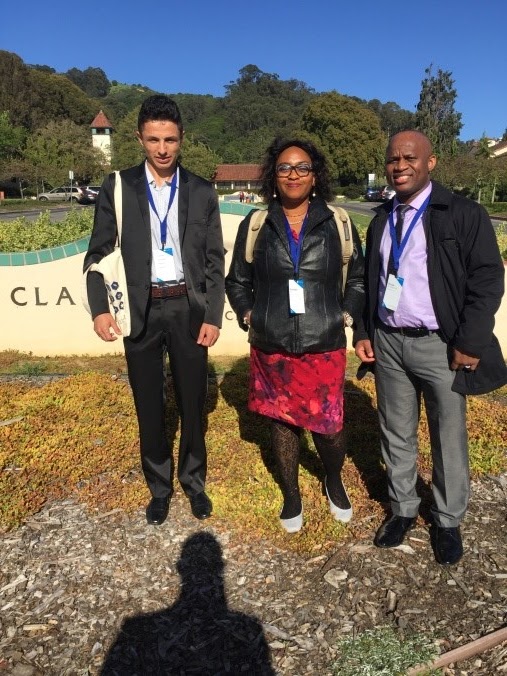
I had always wanted to be a lecturer with a difference, especially in the research world! My dream was to travel around the world while still performing my duties as a lecturer. As I look back at my success story through my CIRCLE journey, I cannot help but be filled with gratitude on being able to attend a conference in the United States of America. It was filled with exciting and memorable moments. After my CIRCLE Fellowship at UDS Ghana, I had scaled hurdles to find outstanding conferences, it was not very easy. I sent in my Abstracts to about three different conference organizers at the time and finally my abstract was accepted for “The Tenth International Conference on Climate Change: Impacts and Responses at the University of California, Berkeley, USA April 20 to 21, 2018”. 


After considerable scrutiny, I got an invitation to attend and present at this noble conference, to say that I was not excited would be a shocker right? Guess what? I WAS NOT EXCITED! One would wonder why, in the recent events of predatory journals and conferences, I had developed cold feet towards this one as I thought this could be one of them. But that ‘still small’ voice kept re-assuring me that this was it! I got my invitation letter quite late after a long wait from abstract reviews. This was exactly two months to the conference date. Even at that, I still ignored my mail for another one week. I finally embraced my fears and decided to have a look at my invitation letter and then decided to do a background check on the organizers by verifying the authenticity of the conference programme. Like the saying goes, “success doesn’t just come and find you, you have to go out and get it”. Therefore, I made a lot of international phone calls, I sent out series of mails to institutions in the United States, I did a lot of Google checks; I just needed to ascertain how real these people were before requesting for financial support from my sponsors – CIRCLE.


The CG Network is situated at University Research Park, University of Illinois, Urbana-Champaign, USA and these organizers are a group of very credible University professionals who have been curating conferences and publishing peer reviewed journals for over 30 years whereby they operate on a hybrid open access model. While 72% of their journals are indexed by Scopus, the remaining 28% are new titles currently under review. I immediately wrote to the ACU for funding request as time was already running out on me, Verity was so helpful and absolutely proactive to my request. As soon as I got approval, even without the immediate arrival of my funds yet, I had to courageously pay for my US visa fees and I began to apply for my USA visa interview with fingers crossed. Alas! Available appointments on the Embassy platform had exceeded the conference date. I took a bold step! I pulled the bull by the horn! How did I do that? I wrote to The US Embassy in Nigeria and requested for an Emergency appointment. Surprisingly, I was responded to within 24 hours and I was given the option to choose my preferred date within one week of the response. Everything happened so fast. I hurriedly left for Lagos for my interview, and I was SUCCESSFUL! I was granted a 2 year Multiple Visa to the United States, all these happened with my persistence, determination and relentless efforts, also great support from ACU, especially Verity Buckley, Mr Ben Prasadam-Halls and other team members behind the scene! I had only 14 days left to finish preparations and leave for the United States; I eventually made it to the USA, successfully passing through the immigration and customs without a hitch. I flew to San Francisco, California via Atlanta Georgia and I arrived at the conference center on the arrival date. 


We had the opportunity to introduce ourselves, I did introduce myself, and all about my CIRCLE research work. I talked about my sponsors, DFID, ACU in collaboration with AAS and VITAE. I enlightened the forum about CIRCLE, and what it stands for - Climate Impacts Research Capacity and Leadership Enhancement. I met and networked with other delegates from different parts of the continents and it was a humbling experience. On the second day of the conference, I delivered my findings which were drawn from my CIRCLE research work and my topic was “Anthropogenic Activities and Climate Change: Impacts on Rural Dwellers”. 


At the end of it all, I got my conference certification together with other presenters at the conference. Overall, the conference programme was very insightful, rewarding and educative. Meanwhile, as a result of my brilliant presentation in the last conference, the organizers have been sending me mails to attend again next year for the “Eleventh International Conference on Climate Change: Impacts and Responses at Pryzbyla Center, The Catholic University of America, Washington DC, USA in April 2019”. Unfortunately, this time, I have no sponsorship yet. Nevertheless, I am totally grateful for this huge opportunity given to me by CIRCLE to be exposed academically and to be in forefront of researchers who are passionate about solving problems that pertains to Environmental Management. CIRCLE has also helped me to become a committed, creative and highly motivated individual who has passion for networking and collaborative research with an uncompromising commitment to quality and outstanding research work. In all, I thank everyone who has made it possible for me to have a success story throughout my CIRCLE journey – DFID, ACU, AAS, VITAE, UDS Ghana and MOUAU Nigeria and to George Lakey who encouraged me to share my humble conference experience. Thank God!


Thursday, 21 July 2016

Judging Soils as a Climate Change Solution: Where is the evidence? My fieldwork experience under CIRCLE

Dr Shade Akinsete,  University of Ibadan,
Cohort 2 CIRCLE Visiting Fellow

Climate change! Climate change!! Climate change!!! Is soil carbon storage a solution? Soils play a key role in climate change, as they could act as sources of or sinks for carbon depending on land-use management. However, sufficient evidence must be provided for the African continent. On this note, I began my field trip in southwest Nigeria in search for some evidence. For different disciplines fieldwork connotes different things. Mine was a real field in beautifully arranged teak plantations, natural forests, and arable farm lands in Onigambari and Omo forest reserves in Oyo and Ogun States, respectively. Beautiful serene environments with clean flowing streams, jumping squirrels, skillfully carved nests, flocking birds, bustling insects and active worms. Thankfully, no snakes were on sight. All these scenes were soon masked in what was about to turn into a very busy soil sampling process. Actually, I was not out there to enjoy the view only but to collect nearly seven hundred soil samples for various laboratory analyses. Why and how did I bring this upon myself? To improve and develop my career capacity provided by rare opportunities such as the Climate Impact Research Capacity and Leadership Enhancement (CIRCLE) programme that not only targets early career researchers but also ensures a good representation of women from different aspects of learning. Also, of the good nature of my home institution, which continually seeks the growth of her faculty members.

Soil profile in arable land use (Cassava farm) Onigambari Forest Reserve, Oyo State, Nigeria

Fig.1. Some Soil profiles sampled for this study: a) Alfisol under natural forest - Onigambari Forest Reserve; b) Inceptisol under teak plantation - Onigambari Forest Reserve; c) Alfisol under arable land (cassava farm) - Omo Forest Reserve; d) Inceptisol under arable land (cassava farm) - Omo Forest Reserve
Storage of carbon (C) in soils, frequently termed ‘soil carbon sequestration’, is a mitigation strategy for reducing atmospheric greenhouse gas (GHG) emissions, especially carbon dioxide (CO2), known to contribute to global warming. So how soils are treated is extremely critical for climate change studies. Under the CIRCLE award, I will be measuring how much carbon is stored in soils under different land-use management strategies in southwest Nigeria, due to insufficient information for the global soil C database and for guiding stakeholders on appropriate future land use planning and climate change mitigation strategies.


L – R: Mr. O. Owolabi (Forest Guide); Shade Akinsete; Dr. S. Jimoh (Forest Ecologist); Dr. J. Orimoloye (Pedologist) Mr. S. Ogundele (Forest Guide) in the Teak Plantation, Onigambari Forest Reserve, Oyo State, Nigeria

I could not have traversed the forest reserves on my own without the forest guides who provided direction and guidance in these terrains. Sampling soils without some past history of land-use engenders difficulty in data interpretation. Therefore, Dr. Saka Jimoh, a forest ecologist of the Department of Forest Resources and Management, University of Ibadan, Nigeria, provided some useful history as well as identifying some of the plant species. Apart from assisting in sampling, he facilitated the network with the ministry of forestry for permission to access these reserves. Without a pedologist, identification of soil types as well as soil characterisation can be frustrating, with various colours under our foot. So on this trip, I could not have left behind Dr. Julius Orimoloye, Department of Agronomy, University of Ibadan, Nigeria. Together with him and some field assistants (graduate students of our University), the soils were identified, characterised and sampled. With the unflinching support and resilience of my team the soil sampling was completed whether it was dusk or in the actual event of heavy rainfall. In the event of future fieldwork, I will enlist this same team, whose support was total to achieve the best despite the serious fuel crisis the country was experiencing at the time of the fieldwork. Although, this fieldwork was more rugged than previous ones I had engaged in, I have no regrets because it was mission accomplished. Now, onto lab work at “Mazingira Centre; ILRI’s state-of-art environmental lab” seeking to provide the evidence……

Mission accomplished- Some members of the team

Thursday, 23 June 2016

CIRCLE Programme: A pleasant exposure so far…

Ms Portia Adade Williams, Science and Technology Policy Research Institute (CSIR- STEPRI), Ghana
Cohort 2 CIRCLE Visiting Fellow

Ms Williams spent her fellowship year at the University of Cape Town, South Africa. Here,she reflects on her time on the CIRCLE Programme.

In January 2016, I arrived at my host institution to officially commence the one-year Climate Impact Research Capacity and Leadership Enhancement (CIRCLE) Visiting Fellowship programme to enhance my research skills and contribute to the aim of the programme. Not knowing exactly what to expect, I did my research on the programme by communicating with some Cohort 1 Fellows to learn from their experiences. This together with the guidance of my host supervisor, Dr. Olivier Crespo and unflinching support from my home mentor Dr. George O. Essegbey, enabled me start working before officially commencing the programme.  

I am half way through the fellowship and I have participated in both local and international programmes.  Besides the educative bi- weekly departmental seminars I participate in, the exposure has been amazing. I participated in the 2nd Students’ Conference on Climate Change and Development at Kirstenbosch Botanical Garden, South Africa, on 18th March, 2016. This was organized by the CIRCLE host at UCT, the African Climate and Development Initiative (ACDI) where insightful presentations related to the theme were made. Another opportunity for me was when ACDI facilitated a meeting between Circle Visiting Fellows (CVFs) and the Research Office at UCT on 21st April, 2016 to introduce the CVFs to the office. This was a meeting between CVFs, our supervisors, host ACDI and the research office constituting Dr. Mignonne Breier and her team. The meeting enabled us seek any assistance required in conducting research in UCT. It later facilitated my participation in a three day writing retreat with the Emerging Researcher Programme (ERP) coordinated by Drs. Lyn Holness and Gudrun Oberprieler of the research office at Mont Fleur conference venue, Stellenbosch, South Africa from 21st to 23rd May, 2016. The retreat was useful and impactful as educative sessions with experiences from other international students were shared, not to mention the learning platform to develop proficient use of time in writing.

Meeting with CVFs, supervisors, CIRCLE host ACDI and the research office team at UCT
Writing retreat at Mont Fleur Conference Venue, Stellenbosch, South Africa.

The latest exposure as part of the CIRCLE Fellowship is my participation in the scholar’s prestigious program at Brown University in Providence, Rhode Island in the United States of America (USA). This was the “Brown International Advanced Research Institute (BIARI)”, hosted by the Watson Institute for International and Public Affairs at Brown University. About 146 participants from 55 countries convened from 4th – 18th June 2016, to participate in a two week annual residential program sponsored by Santander Universities. Out of the four institutes hosted, I had the privilege of participating in the climate change institute under the theme “Climate Change and Its Impacts: Connecting Variability and Knowledge in a Global System”. Convened by Brown University professors, each section featured lectures and seminars led by distinguished local and international guest faculty.

The Climate Change Institute at BIARI 2016, Brown University, USA

It was a unique experience meeting individuals across academic, professional and geographic boundaries. At the end of the programme, various research groups were formed. I am now part of a global group of 11 researchers from 8 different countries representing four continents with the common goal of developing further a research proposal to conduct a comparative study across countries and we hope to continually collaborate and research into emerging issues related to climate change within our expertise.

Other participants at BIARI 2016, Brown University, USA

On my CIRCLE research, I am working on “Climate variability impact on pineapple production in Ghana”. Pineapple heavily depends on climate for performance and is an important crop within the horticultural sub-sector of Ghanaian economy. With limited knowledge relating to climate and pineapple productivity, this research focuses on assessing the effect of variability on pineapple production under climatic and economic perspectives. It also explores the coping strategies employed by pineapple farmers in Ghana. It is a holistic study which will play a critical role in assisting pineapple farmers to adapt to climate variability and cope with short term impacts.
At the end of June 2016, I will be participating in a one week winter school course on “Using climate information for adaptation and policy development” organized by the Climate Systems Analysis Group(CSAG) of the Environmental and Geographical Sciences Department of UCT. I also hope to participate in a conference in the next two months to present part of the findings from my study. I aspire to develop my career and build my intellectual capabilities for professional growth and my participation in the CIRCLE programme so far has set me on the right path. Being an early career academic, I hope to become an internationally recognised scientist in the field of climate change and I value this unique experience CIRCLE programme through DFID, ACU and AAS has given me. I am also grateful to CSIR-STEPRI and UCT for all the support and assistance.

Tuesday, 12 January 2016

Connecting the dots in my CIRCLE research.

By Esther Ekua Amoako, University For Development Studies 
Cohort 1 CIRCLE Visiting Fellow 

Dr Amoako spent her fellowship year at  University of Dar es Salaam, Tanzania. Here, she reflects on her time on the CIRCLE Programme.

On 28th of January, 2015 I left Tamale in the Northern region of Ghana, where I work and live with my family to the Centre for Climate Change Studies (CCCS), University of Dar es salaam, Tanzania. This was my first time travelling to the East. Early in the morning I was greeted in Kiswahili, a language I skipped years ago when I had admission to read Political Science and Kiswahili at the University of Ghana.

This was the beginning of the 11 months journey into my research career away from home. It has been one of the best, working in Ghana and Tanzania.  Coming back to Ghana for data collection in March, I worked with research assistants from the University for Development Studies (My home institution), Savanna Agricultural Institute (SARI), and the Mole National Park, Ghana. I had the opportunity to work with a number of people from the office of the CCCS, the Geography department, Botany department and even crossing over to the Sokoine University of Agriculture (SUA) and the Kitulangalo forest in Morogoro, Tanzania. Most of these personalities were experts and professors in their own field, some directly related to my field of research others not directly. I had to work with some research assistants in the field data collection, with plant ecologist and technicians to help identify tree species in the Guinea Savanna and the Miombo woodlands of Ghana and Tanzania respectively. I needed to work with laboratory technicians from the SARI, Ghana and Forestry and Nature Conservation, SUA, Tanzania for soil sampling and preparation of the soils for laboratory analysis, seed bank germination. In the Kitulangalo forest I worked with a forest technician who assisted with the identification of tree species in Kiswahili before it was translated into the scientific names. I am glad that the process of soil preparation and analysis was used as practical training for three female students from the Tanzania Technical Institute.
During the period under review, I had the opportunity to make presentations of my research in a workshop organized by CCCS with the other CIRCLE fellows and PhD students and two international conferences organized by the Society for Ecological Restoration (SER) and the Association of Fire Ecology (AFE), in Manchester, UK and San Antonio Texas, US respectively. I was privileged to receive partial travel support from the UNU-LRT, Iceland for the SER conference and also the second recipient of the Mike Da Luz Student Travel Award for a research that has Potential of Contributing to the Wildland Fire Community. The award was given by the AFE on the basis that there is much use of fire in the savannas of Africa which has enormous impact on ecosystems and climate change but with very little research on fire. This is a great motivation and encouragement to me to continue conducting research in fire and ecosystems management. I received the Award through the efforts of my mentor at my home institution.

I am in the process of submitting two manuscripts for my study. The research is also being upgraded for my PhD studies at Rhodes University, South Africa for which I just been selected for a fellowship support from the Organization for Women Scientist in Developing and Least Developed Countries (OSWD).
Through it all, I have learnt that networks are very important. At every stage of a scientific research one needs the support of individuals, groups, communities and institutions. This can only be achieved through building good relationships and effective communication. There are processes you can never skip but you definitely have to work with people and institutions to achieve them.  In these networks, you learn from the knowledge and experiences of experts and you have to also share and impart knowledge because you are the expert of your research. You can hardly do it alone. There is always a need for networking and collaboration.

The year has been a very long one with a lot of activities and travelling.  I am now back home here in Tamale, Ghana. I am very grateful to CIRCLE for the funding and research exposure which has enhanced my visibility as a researcher and my research. This has fulfilled the goals I set for myself at the beginning of the fellowship and my career development.

By

Esther Ekua Amoako

Esther's home institution is the University For Development Studies and her host institution for the CIRCLE visiting fellowship has been the University of Dar es Salaam.

Monday, 21 September 2015

CIRCLE Research: Contributing to Ecosystems Management, Restoration Ecology and Climate Change Mitigation

By Mrs Esther Ekua Amfoa Amoako, University for Development Studies, Ghana
Cohort 1 CIRCLE Visiting Fellow

I am a former fellow the UNU-LRT (United National University – Land Restoration Training) programme in Iceland. I have a background in Environmental Management which looks into policies and management of environmental and natural resources. I was enrolled in the six month UNU-LRT programme in 2012, which is where my interest in practicing restoration ecology began. In January 2015 I commenced the one-year CIRCLE Visiting Fellowship to further develop my research in this field.

Esther Ekua Amoako
Ecosystems management is important in climate change mitigation and adaptation. There are various forms of maintaining and improving ecosystems, mainly through conservation and preservation of species and habitats. The other forms of ecosystems management include restoration, and rehabilitation of degraded, damaged, destroyed or fragmented ecosystems.

Ecosystems degradation through deforestation, mining, bush burning, to mention but a few, create carbon sources that exacerbate the impacts of climate change. The irony is that while ecosystems degradation is a major cause of global climate change, the impact of climate change can in turn result in ecosystems degradation. When ecosystems are degraded the repercussions are enormous.

My research in the CIRCLE programme is on fire and terrestrial ecosystems management: The impact of anthropogenic bush burning on plant species and soils in West African savanna/ parklands. My focus is on the Northern Region of Ghana which is experiencing significant fragmentation of vegetation. The region which used to be categorised ecologically as the Guinea Savanna Zone is gradually transforming into Sudan Savanna (with fewer scattered trees). The result of human disturbances such as bush burning and deforestation has implications for both biodiversity and climate change.

My study is focused on measuring the density and diversity of tree species, soil seedbanks and soil nutrients under different fire management regimes. The seed bank experiment revealed a potential for natural regeneration of fire disturbed ecosystems. The soil organic carbon content is also measured and compared with tree densities on burnt and unburnt areas.

The study is contributing to the knowledge of fire in savannas in general and specifically to the Northern Region of Ghana, which has recorded higher occurrences of bush burning than the other nine regions of Ghana. It will serve as baseline information or reference for further studies, restoration of degraded lands, policies and advocacy on fire management.

Most Universities in Ghana place emphasis on issues of sustainable land management, biodiversity and conservation etc. which are more focused on the science and knowledge of environmental management. Ecological restoration, however, is the practice of restoring or rehabilitating degraded ecosystems which is what is needed most in sub-Saharan Africa.

Ghana for instance, has to buy back its diminishing (estimated at 1.3-1.7% per annum) vegetation cover and forest resources through restoration. Looking at a situation we find below calls for urgent actions from all stakeholders.


The satellite images below show the vegetation cover loss between 1973 and 2003 and anthropogenic fire active zones


Sources: Global Forest Resources Assessment 2010, Country Report, Ghana                       MODIS/ NASA 2012

A positive aspect of the CIRCLE programme is its support for networking with stakeholders: in particular sharing research information with non-acadamics and policy makers. I think the findings of my research can not be shelved but must be shared. It has a lot of policy implications  for ecosystems magement, which can be tranferred to all stakeholders. This can only be achieved through collaboration between my host and home institutions and others like the Environmental Protection Agency (EPA) and Environmental NGO’s. This will surely reinforce the leadership enhancement aspect of the CIRCLE progamme.

In the long term, it is my hope and desire that indiscriminate burning will be reduced and more carbon sinks created to ensure healthy ecosystems that will contribute to mitigating climate impacts. My research is directed toward this objective and aligns firmly with the goal of the Society for Ecological Restoration.

Esther Ekua Amoako is a CIRCLE Visiting Fellow from the Unversity for Development Studies, Ghana, currently hosted at the University of Dar Es Salaam, Tanzania.