Showing posts with label kenya. Show all posts

Friday, 28 February 2020

Raising awareness among smallholder farmers in Embu and Mwea, Kenya on the impacts of climate change on agriculture

by Dr Hannah Karuri, Cohort 1 Fellow, University of Embu


The Climate Impacts Research Capacity and Leadership Enhancement (CIRCLE) programme is an initiative of the UK’s Department for International Development (DFID). Managed by the Association of Commonwealth Universities (ACU), the programme is a response to the shortage of local scientists contributing to knowledge on the impacts of climate change on local development in sub-Saharan Africa. Maximising the potential impact of the research conducted under CIRCLE has been a key priority for the programme, leading to the launch of the CIRCLE Research Uptake Fund. This fund has been designed to provide financial support to fellows to enable them to conduct activities related to ensuring their research reaches potential users and other stakeholders.

My research activities under CIRCLE are on climate change, plant- parasitic nematodes (PPN) and smallholder agriculture. Plant-parasitic nematodes are microscopic worms that feed on plant parts and are a major constraint to crop production. Development, lifecycle, infectivity, geographical distribution and abundance of PPN is affected by changes in temperature and moisture. This is due to the fact that PPN growth and reproduction is directly related to these environmental factors. Climate change may result in an increase in PPN abundance and an expansion of the geographical distribution range which may have a detrimental impact on crop production in Kenya.

Smallholder farmers in a maize field in Mwea, Kenya during a research uptake activity. Photo: Hannah Karuri
Smallholder farmers are not aware of the impact of PPN on crops due to the fact that, PPN are microscopic and the symptoms that they cause are often confused with nutrient deficiency and other abiotic stresses. Therefore, my activities under the CIRCLE Research Uptake Fund involved training farming communities in Embu and Mwea regions of Kenya on PPN and farming techniques that can be used to reduce PPN population in crop fields.  Through collaboration with local and national agricultural institutions, groups of smallholders were trained on use of low cost PPN management techniques such as planting nematode resistant crop varieties, application of organic manure and intercropping. These techniques had been previously tested and proven to be more sustainable and cost effective compared to application of nematicides. The farming techniques will reduce damage caused by PPN and subsequent crop yield losses, thereby improving smallholders’ livelihoods. Since nematode damage affects the quality of some crops such as sweet potato, reducing PPN will also improve quality of marketable roots.


Smallholder farmers in a maize field in Mwea, Kenya during a research uptake activity. Photo: Hannah Karuri
Farming communities were also sensitized on the future impact of climate change on abundance and distribution of nematodes and the predicted effect on yields. Demystifying climate change to smallholders is a challenge due to the strong influence of traditional and religious beliefs.  Through the research uptake fund, information on climate change and its impact on agriculture was provided to smallholders in Mwea and Embu through reading materials that were written in a language that was simple and clear. Training of smallholders on low cost nematode management techniques will be done in other Kenyan regions as follow-up activities in order to sustain the farming practices that were introduced to smallholders in the two regions.


For further information on CIRCLE and the CIRCLE Research Uptake Fund, please contact George Lakey at George.Lakey@acu.ac.uk

Wednesday, 8 November 2017

Kenyan Policy Makers Dialogue on Gender and Social Inclusion in the Climate-Smart Agriculture Strategy: Linking International and National Policy

By Catherine Mungai and Caroline Bosire, from the International Livestock Research Institute, Kenya
Cohort 1 and Cohort 3 (resp.) CIRCLE Visiting Fellows

Kenya has made great headway in developing policies and strategies to respond to climate change across different sectors; most notably in agriculture. The agricultural sector is the driving force of Kenya’s economy and is also one of the sectors most sensitive to the impacts of climate change. The agricultural sector has been identified as a major source of greenhouse gas emissions, therefore necessitating the identification of measures through which the sector can mitigate climate change. Introduced by the Food and Agriculture Organization of the United Nations, climate-smart agriculture (CSA) is one such approach which aims to sustainably improve agricultural productivity, increase farmers’ resilience, reduce and/or remove greenhouse gas emissions, and support the achievement of food-security and development goals. To this end, through the Ministry of Agriculture, Livestock and Fisheries, Kenya has developed a CSA Strategy which will guide the implementation of the country's Nationally Determined Contribution for the agriculture sector.  

Catherine Mungai (CIRCLE Cohort 1 fellow) presents her results to policy makers for their input and feedback

Having received Research Uptake funding from CIRCLE, CIRCLE Cohort 1 Fellow Catherine Mungai organised an informative session where she shared findings from her CIRCLE funded research: ‘Uptake of Climate-Smart Agriculture Through a Gendered Intersectionality Lens: Experiences from Western Kenya’. The meeting was held at the National Climate Change Resource Centre (NCCRC) and was organized together with the National Gender and Equality Commission (NGEC) and the Climate Change Directorate in the Ministry of Environment and Natural Resources (MENR). Having NGEC on board was essential as the mission of the commission is to effectively and efficiently promote gender equality and freedom from discrimination of all persons in Kenya. The commission also spearheads the development of the gender submissions for Kenya to the UNFCCC and ensures that gender is mainstreamed from national to county level. Thirty participants including policy makers from the Ministry of Environment and Natural Resources, researchers from the CGIAR and NGO representatives participated in the meeting.

For policy makers, the results of the study demonstrate the need to consider gender and social inclusion in the development and implementation of CSA policies and programmes in order to ensure equitable development. The study provides evidence on why policy development and implementation agencies need to ensure that gender issues are addressed from conception of policies through to implementation. The presentation was timely and instrumental in supporting the development of action plans for the implementation of CSA at national and county level. Mungai’s research findings emphasize the need for context specific CSA technologies and practices which take into consideration social and cultural factors. The presentation was also tailored to generate feedback to be used in developing a policy brief.


Participants at the policy round table held at the National Climate Change Resource Center, Nairobi, Kenya 

There was great interest in the work and very valuable feedback from the various participants. One important message that came across was the need to clearly target the policy brief recommendations to either the policy makers at the national level or the implementers at the lower levels, which would include the county government and other institutions. The meeting also included discussions on preparation of a national gender position statement for the upcoming 23rd Conference of the Parties to the United Nations Framework Convention on Climate Change (COP 23) to be held in Bonn from 6 to 17 November. The presentation therefore served as a case study to demonstrate the scope of policy development from global, regional, national and local levels. The case study also demonstrated how research can be integrated into the policy process.

Thursday, 21 July 2016

Judging Soils as a Climate Change Solution: Where is the evidence? My fieldwork experience under CIRCLE

Dr Shade Akinsete,  University of Ibadan,
Cohort 2 CIRCLE Visiting Fellow

Climate change! Climate change!! Climate change!!! Is soil carbon storage a solution? Soils play a key role in climate change, as they could act as sources of or sinks for carbon depending on land-use management. However, sufficient evidence must be provided for the African continent. On this note, I began my field trip in southwest Nigeria in search for some evidence. For different disciplines fieldwork connotes different things. Mine was a real field in beautifully arranged teak plantations, natural forests, and arable farm lands in Onigambari and Omo forest reserves in Oyo and Ogun States, respectively. Beautiful serene environments with clean flowing streams, jumping squirrels, skillfully carved nests, flocking birds, bustling insects and active worms. Thankfully, no snakes were on sight. All these scenes were soon masked in what was about to turn into a very busy soil sampling process. Actually, I was not out there to enjoy the view only but to collect nearly seven hundred soil samples for various laboratory analyses. Why and how did I bring this upon myself? To improve and develop my career capacity provided by rare opportunities such as the Climate Impact Research Capacity and Leadership Enhancement (CIRCLE) programme that not only targets early career researchers but also ensures a good representation of women from different aspects of learning. Also, of the good nature of my home institution, which continually seeks the growth of her faculty members.

Soil profile in arable land use (Cassava farm) Onigambari Forest Reserve, Oyo State, Nigeria

Fig.1. Some Soil profiles sampled for this study: a) Alfisol under natural forest - Onigambari Forest Reserve; b) Inceptisol under teak plantation - Onigambari Forest Reserve; c) Alfisol under arable land (cassava farm) - Omo Forest Reserve; d) Inceptisol under arable land (cassava farm) - Omo Forest Reserve
Storage of carbon (C) in soils, frequently termed ‘soil carbon sequestration’, is a mitigation strategy for reducing atmospheric greenhouse gas (GHG) emissions, especially carbon dioxide (CO2), known to contribute to global warming. So how soils are treated is extremely critical for climate change studies. Under the CIRCLE award, I will be measuring how much carbon is stored in soils under different land-use management strategies in southwest Nigeria, due to insufficient information for the global soil C database and for guiding stakeholders on appropriate future land use planning and climate change mitigation strategies.


L – R: Mr. O. Owolabi (Forest Guide); Shade Akinsete; Dr. S. Jimoh (Forest Ecologist); Dr. J. Orimoloye (Pedologist) Mr. S. Ogundele (Forest Guide) in the Teak Plantation, Onigambari Forest Reserve, Oyo State, Nigeria

I could not have traversed the forest reserves on my own without the forest guides who provided direction and guidance in these terrains. Sampling soils without some past history of land-use engenders difficulty in data interpretation. Therefore, Dr. Saka Jimoh, a forest ecologist of the Department of Forest Resources and Management, University of Ibadan, Nigeria, provided some useful history as well as identifying some of the plant species. Apart from assisting in sampling, he facilitated the network with the ministry of forestry for permission to access these reserves. Without a pedologist, identification of soil types as well as soil characterisation can be frustrating, with various colours under our foot. So on this trip, I could not have left behind Dr. Julius Orimoloye, Department of Agronomy, University of Ibadan, Nigeria. Together with him and some field assistants (graduate students of our University), the soils were identified, characterised and sampled. With the unflinching support and resilience of my team the soil sampling was completed whether it was dusk or in the actual event of heavy rainfall. In the event of future fieldwork, I will enlist this same team, whose support was total to achieve the best despite the serious fuel crisis the country was experiencing at the time of the fieldwork. Although, this fieldwork was more rugged than previous ones I had engaged in, I have no regrets because it was mission accomplished. Now, onto lab work at “Mazingira Centre; ILRI’s state-of-art environmental lab” seeking to provide the evidence……

Mission accomplished- Some members of the team

Friday, 4 September 2015

ILRI emerging career researchers learn to use ‘paperless’ data collection techniques

By Joyce Maru from The International Livestock Research Institute (ILRI), Kenya

This post is re-posted with permission thanks to Joyce Maru from The International Livestock Research Institute (ILRI). For the original post, please follow this link.

Emerging career researchers (ECRs) at the International Livestock Research Institute (ILRI) were recently trained to better collect, organize and manage the data they generate during their day-to-day research activities, starting from data collection in the lab or field through to publishing of research results and archiving.


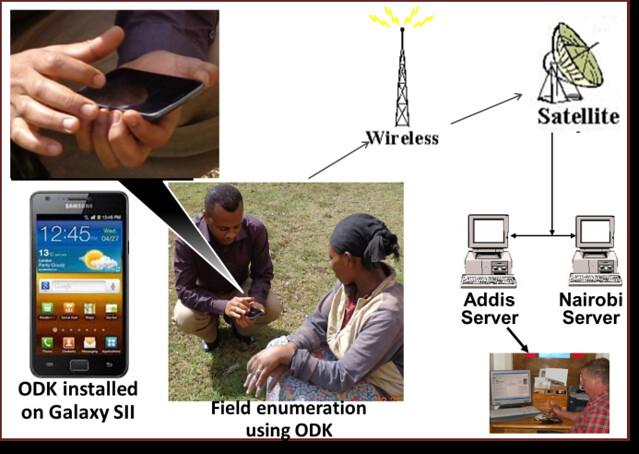
Using the Open Data Kit at ILRI Ethiopia

One of the tools introduced in the training was the Open Data Kit (ODK) which is an open-source suite of tools that helps organizations to author, field, and manage mobile data collection solutions. ILRI’s research activities are moving from paper-based data-collection methods to mobile-based options like ODK; therefore there’s a need to ensure that the emerging researchers who support ILRI scientists in the field are up-to-date with these new methodologies.

The combination of affordable, powerful, mobile devices (e.g. phones, tablets) and easy-to-use readily-available (open-source) software has significantly lowered the barriers to electronic-based data-collection. ODK tools are fairly easy to develop & use and help to speed up the processing for getting data ready for analysis. Furthermore these tools have the potential to decrease research costs, particularly in the long run, by using standard tools and databases and reduced cleaning time if pre-validation quality assurance has been included in the tool design.
This is the stuff that takes data collection to a new level, aids in collecting and accessing data, thus moves the cleaning work faster.
Jesse Owino, PhD fellow
The ECRs were also introduced to ILRI’s biorepository popularly known as Azizi which is a Swahili word meaning ‘precious’. ILRI biorepository is a research service unit at ILRI tasked with ensuring safe, secure and efficient storage of biological materials and their related data. The aim is to develop a collaborative network of partners who share their samples and data, by encouraging the use of common protocols and systems, creating a virtual, distributed resource for probing the diversity of African livestock. The unit currently preserves a wide range of biological materials and has over 84,000 materials which are open source and can be widely used by the research community.
Thanks to CapDev and RMG for closing the tech gap between social and physical science through this training. I feel very equipped and ready to develop my first ODK data tool!
Violet Barasa, research assistant
The training was conducted by ILRI’s Research Methods Group (RMG) working closely with ILRI’s Capacity Development Unit (CapDev) and the People and Organizational Development Unit (POD) units. Twenty two participants, including PhD and MSc fellows and early career researchers (research assistants and technicians) attended the workshop.

The course was part of an initiative to provide learning opportunities to graduate fellows and staff that include a blend of a series of “bite-size” modular courses in cross-cutting skills areas, e-learning opportunities, effective mentorship support, evidence and assessment to further enrich the their learning experience at ILRI.

Friday, 21 August 2015

Reflections on CIRCLE Programme: Personal thoughts and experience


By Dr Ifeanyi Ndubuto Nwachukwu, Michael Okpara University of Agriculture, Nigeria

Dr Nwachukwu spent his fellowship year at Kenyatta University, Kenya. After settling back into his home institution, he reflects on his time on the CIRCLE Programme.


The Climate Impact Research Capacity and Leadership Enhancement (CIRCLE) programme was borne out of the need to build the capacity of early career African Researchers in the area of climate change and its local impacts on development. The point of departure from other fellowships lies in CIRCLE’s approach in ensuring overall professional development. A case in point is the introduction of the Researcher Development Framework (RDF) which is a monitoring and evaluation framework for assessing professional development. In addition the fellow has the support of a team of professionals with proven track records as mentors, supervisors, and special advisors The Institutional Strengthening Component of the programme which aims to re-model the development strategies and systems of the fellows’ home institutions is configured to sustain the professional revolution kick.


Coming from the background and tradition where the bulk of academic work rests on the shoulders of junior academics, it is sometimes difficult to plan and execute personal professional development programmes. The tripod of 40:40:20 (40% - teaching; 40% - research and 20% - community service) which characterizes an ideal academic life is predominantly obscured and truncated by the systemic “pull-him-down” syndrome encountered by my class of academics. This, along with academic brain-drain across the continent, helps explain why most of the tertiary institutions in Africa are bottom heavy. My participation in the CIRCLE programme has now reversed the ugly trend by re-awakening my dampened consciousness for professional growth.


In this context, CIRCLE has provided a whole new scholastic milieu which creates a window for rich, rewarding and alien experiences. This has come in the form of a rare, novel opportunity to understudy new systems, structures, practices, cultures, languages etc… while executing my research project in the host institution. Upon arrival in January, I was tasked by my supervisor to develop a quarterly work plan to maximize time-management and also to serve as a monitoring and evaluation framework. Part of the plan was to undertake desk-based research to assess the sectoral effect of climate change in a cross-regional comparative context using time series data alongside my CIRCLE research project.


I subsequently won a book chapter slot in a competitive book project using an abstract derived from the research, the book chapter draft underwent several rigorous reviews. I must confess that the review process was the toughest in my entire academic life. On a happy note, the chapter has been accepted and an honorarium of $2,525 paid. The book titled “Milestones in Climate Compatible Development in Selected Countries of Eastern and Southern Africa” is organized by the Organization for Social Science Research for Eastern and Southern Africa (OSSREA), Ethiopia and supported by Danish International Development Agency (DANIDA).


Within my eight months stay, I have participated in two training workshops and a conference here in Kenya; one was organized by Consortium of Advanced Research Training in Africa (CARTA) for young researchers in conjunction with African Population and Health Research Center (APHRC), Kenya and the University of the Witwaterand (WITS), South Africa. The second was on Didactics, E-learning and Quality Assurance for Integrated Watershed Management (IWM) lecturers and facilitated by Prof. Jenny Day University of Cape Town, South Africa and Dr. Stefan Thiemann (IWM Expert GmbH, Kempten, Germany). The conference was the 2nd Africa Ecosystem Based Adaptation for Food Security (EBAFOSC 2) conference organized by UNEP and held on 30 – 31 July, 2015 in Kenya. EBAFOSC – 2 paraded a good number of high profile researchers within and outside the continent who made very scintillating country specific presentations. I was able to gain greater insights into ecosystem based adaptation approaches and climate change situations in some parts of the continent which I find very useful in my research. The scientific discussion sessions were also very rewarding. The conference ended with the adoption of declaration for Nairobi Action Agenda on Africa’s Ecosystem Based Adaptation for Food Security.


Over the period under review, I have come in contact with a good number of researchers from different parts of the continent who are already collaborating with me on a number of research fronts. By the end of the CIRCLE programme, I hope that my skills and competences would have grown to champion the cause of climate change research in my home institution. The multiplier effect of this alien programme launch would be felt in the quantum and quality of research output emanating from the African continent in line with the vision and expectations of grooming home grown solutions to Africa’s development problems. I am most grateful to the DFID, ACU and AAS for this rare opportunity to be part of the CIRCLE programme.

Tuesday, 11 August 2015

Role of ‘critical research friends’ in mentoring emerging researchers: Reflections from a mentorship workshop

By Joyce Maru, the International Livestock Research Institute (ILRI), Kenya
This post is re-posted with permission thanks to Joyce Maru from The International Livestock Research Institute (ILRI). For the original post, please follow this link.


The International Livestock Research Institute (ILRI)/CGIAR graduate fellowship program provides practical, hands-on mentorship support in well-resourced ILRI research laboratories and facilities in Kenya, Ethiopia and in other countries where ILRI operates.
This hands-on mentoring, usually in periods ranging from six months to three years, is an important component in developing the capacity of emerging developing-world leaders in agricultural research (at MSc, PhDs and postdoc levels). It also supports production of high-quality of research outputs from ILRI.

A key consideration in the graduate fellowship program is the need to understand and respond to the career and capacity needs of research fellows so that the mentoring supports them appropriately in designing and carrying out their work in developing-country contexts.
One of the ways in which ILRI is helping fellows is by giving them access to groups of ‘critical research friends’ made up of various mentoring supervisors. According to Costa and Kallick (1993) a critical friend is ‘a trusted person who asks provocative questions, provides data to be examined through another lens, and offers critique of a person’s work as a friend.’ The term is mostly applied in critical pedagogy and in contexts of mentoring and coaching to refer to support provided to individuals and groups undertaking a certain project. In ILRI’s context, graduate fellows or early-career researchers could, therefore, refer to their mentoring supervisors as their critical research friends.

I recently attended a training of trainers (ToT) workshop on mentorship in Johannesburg, South Africa, which was conducted by Vitae UK and organized through the CIRCLE fellowship program. In this blog post, I reflect on the key learnings I derived from the workshop and how I think they can be used to enhance ILRI’s approach to mentorship.
As a starting point, it is vital to clarify the different terminologies that are loosely and interchangeably used to refer to ‘mentorship support’ in research. For example, it is important to clarify whether when using that term, we mean ‘graduate fellow supervisors, mentoring supervisors, supervisors, line managers or coaches.

I prefer the term ‘critical research friend’ or ‘mentoring supervisor’ because, for example in ILRI’s case, graduate fellow supervisors often assume a hybrid role of mentoring graduate fellows although other informal mentoring relationships may emerge stemming from friendships with work colleagues.
Irrespective of approach used, however, the important question is what makes a good mentor? Is it correct to assume that line management relationships automatically become mentoring relationships? And moreover, how can we encourage line manages to take a mentoring approach to supervision? 


Qualities of a good mentor

During group discussions at the Johannesburg workshop, a mentor was portrayed as one with an ideal personality and demonstrating a long wish list of qualities, behaviour and competencies, but the top five qualities that I think a critical research friend should demonstrate include:
  • Generosity of spirit – mentoring is ingrained in their value system and they are always willing to share skills, knowledge and expertise with their mentees i.e. they are available as a resource and a sounding board;
  • https://www.blogger.com/blogger.g?blogID=1536403954582100997#editor/target=post;postID=47371528094188807;onPublishedMenu=posts;onClosedMenu=posts;postNum=0;src=linkThey always encourage and inspire their mentees to learn, improve and conduct cutting-edge research withintegrity;
  • Self-reflective and values ongoing learning and growth in the field;
  • Helps the mentees to set and meet ongoing personal and professional development Mentors continuously help their mentees to develop by highlighting, through constructive feedback, the areas that need improvement and by objectively focusing on the mentee’s behaviour and not their character;
  • Well respected and admired by colleagues and employees in all levels of the organization.

Making ILRI a centre of excellence in mentoring emerging/early career researcher

If we aspire to become a centre of excellent in mentoring and supporting emerging career researchers, some important considerations and reflections could include:
  • How does the mentorship scheme align with the strategic direction of the organization?
  • How do we identify and support those who have the values and qualities to become mentors?
  • Is there a strategic plan, leadership and champions for mentoring?
  • Is there a clear, formal policy and guidelines on mentorship? (Defined roles of mentor/mentee, implementation plan, mentoring support, evaluation and feedback mechanism);
  • Is it sustainable?
  • Is it a coordinated approach? Who leads the initiative?
  • How do we continue to develop mentoring skills and capabilities?
  • Can we demonstrate output and impact?
  • How do we reward and incentivize best practice?
  • How do we institutionally support good mentors with integrity and without exploitation?
  • How do we set boundaries for the institution, the mentor and the mentees?
  • How do we create a critical mass of mentors?
  • What alternative models can we create for a mentoring experience when resources are scarce?
  • Is it inclusive? (Gender sensitive, interdisciplinary, diversity);
Here a question can be posed on the extent of the need to have, in place, a unified/formalized mentoring system that allows equality of access and is quality assured. I think that quality assurance underpins effective mentoring relationships and, therefore, there is need for more systematic and constructive support and mentoring for emerging research leaders.
 
Joyce Maru is a capacity development officer at ILRI.

Friday, 7 August 2015

Shifting from the Binary: Analyzing Climate Change Adaptation through the Intersectionality Lens

By Catherine Mungai, International Livestock Research Institute and Mercy Derkyi, University of Energy and Natural Resources 
Cohort 1 CIRCLE Visiting Fellows

Catherine Mungai (left) and Mercy Derkyi (right)

‘Understanding the diversities and interactions in men and women groups is the concept of intersectionality’
It is now widely recognized that the impacts of climate change and variability are not uniformly felt amongst communities in Africa. For example, based on their roles and responsibilities, female farmers and male farmers have differentiated vulnerabilities to climate change and consequently develop differentiated coping and adaptation strategies. However, it is important to recognize that addressing climate change impacts goes beyond whether one is a female or a male.  For a long time now, the issue of gender in climate change has been addressed through the binary lens i.e. male vis a vis female. While using this lens has brought to the fore that adaptation and mitigation strategies should address issues of equity, it is now increasingly becoming apparent that there are other dimensions such as religion, ethnicity, age, race, educational level and socio-economic levels that need to be considered during the development and implementation of adaptation and mitigation strategies. This was the main message emerging from the presentations made by Mercy Derkyi and Catherine Mungai during the Gender mainstreaming session at the 4th Climate Change and Population Conference on Africa (CC POP-Ghana 2015). The conference which was held at the University of Ghana from 29 - 31 July 2015, created an ideal platform to share ongoing research on climate change in Africa ahead of the upcoming 21st session of the Conference of the Parties to the United Nations Framework Convention on Climate Change (COP 21). Dr Derkyi and Ms Mungai were supported to attend the conference as part of their Climate Impact Research Capacity and Leadership Enhancement in Sub-Saharan Africa (CIRCLE) fellowship programme.


Experiences from the forest and agriculture sectors in Ghana

During her presentation on “Exploring Gender, Climate Change Vulnerability and Adaptive Capacity through an Intersectionality Lens,” on behalf of co-authors, Mercy emphasized the need for using an intersectionality lens to analyze climate change adaptation in the forest and agriculture sectors.  She pointed out that in most rural settings, the roles and responsibilities of gender are socially and culturally defined and these determine how communities experience and respond to climate change and variability. She further added that, disaggregated data by gender and more specifically its intersection with other social groups like class, age and wealth in Ghana are scarce. Most studies tend to focus on single variable such as gender thus projecting it as binary and such focus obscures the fact that gender takes meaning from its intersections with other identities. Through a literature review, she explains what intersectionality is and why it is needed; principles governing it and comparative analysis with other approaches; Gender as intersectionality and empirical evidence; Intersectionality in climate issues and steps to integrate intersectionality in academic research. Quoting Hankivsky (2014) she said ‘People’s lives are multi-dimensional and complex thus shaped by different factors and social dynamics operating together’. She concludes that Intersectionality may not be a ‘’cure for all’’ but if explicitly oriented, it transforms, build coalitions among different groups and work towards social justice especially among gender and intersecting categories in the era of climate change.

Experiences on Climate-Smart Agriculture from Nyando, Kenya

Focusing on the agricultural sector, Catherine gave a presentation under the topic “Engendering Climate-Smart Agricultural Innovations in Kenya.” In her presentation, Catherine focused on the use of the intersectionality lens to analyze the uptake of climate-smart agricultural (CSA) technologies and practices in Nyando, Kenya. Catherine pointed out that the adoption of CSA, supported by enabling frameworks and institutions, is crucial to transforming African agriculture into a long-term and sustainable system. She further added that studies undertaken amongst farmers in Africa have shown that gender relations determine the ways in which the changing climate is experienced by small holder farmers. However, she also emphasized that not all women (nor all men) are the same in that they do not all have the same roles, levels of access to, and control over, resources or power in decision-making, since gender norms are also related to race, class, ethnicity, religion, and age. Using Nyando as a case study, emerging results from her studies reveal that there are differences in the uptake of climate-smart agricultural technologies and practices between different categories of men and women farmers. Nyando in Kisumu, Kenya is one of the learning sites where ongoing research on climate-smart agricultural technologies and practices, is being undertaken by the CGIAR Research Program on Climate Change, Agriculture and Food Security (CCAFS).

As a way forward both presenters emphasized the need to use the intersectionality lens to enhance the understanding of the synergies between gender and climate change in order to ensure that polices, strategies and plans on adaptation and mitigation to climate change yield equitable results for communities.

Please click on the following links to access the presentations:
This blog story was written by :

Catherine Mungai, Post-Masters Fellow
Home institution: International Livestock Research Institute/The CGIAR Research Programme on Climate Change, Agriculture and Food Security
Host institution: University of Nairobi/ Institute of Climate Change and Adaptation

And

Mercy Afua Adutwumwaa Derkyi (PhD), Post-Doctoral Fellow
Home Institution: University of Energy and Natural Resources
Host Institution: University of Ghana

Wednesday, 29 July 2015

ILRI supports early career agricultural researchers through the CIRCLE fellowship program

By Joyce Maru, The International Livestock Research Institute (ILRI).  

For the original post, please click here. The Climate Impact Research Capacity and Leadership Enhancement in Sub-Saharan Africa (CIRCLE) program is an initiative of the UK’s Department for International Development (DFID) that is developing the skills and research output of early career researchers in Africa in the field of climate change. 
Started in 2014, the program runs until 2018 and is managed and implemented by the Association of Commonwealth Universities (ACU) and the African Academy of Sciences (AAS).

How ILRI participates in CIRCLE 

The International Livestock Research Institute (ILRI) is a partner in the program and is both a ‘host’ and a ‘home’ institute for CIRCLE, which is integrated into ILRI’s graduate fellowship program.
At ILRI, the program is coordinated by the Capacity Development Unit and supported by the Livestock Systems and Environment (LSE) program and the CGIAR Research Program on Climate Change, Agriculture and Food Security (CCAFS).
In 2015, ILRI, through the LSE program is hosting Abraham Belay, an MSc Fellow from Ethiopia’s Hawassa University’s Wondo Genet College of Forestry and Natural Resources who is supervised by John Recha of CCAFS.
As part of the partnership with CIRCLE, the CCAFS program nominated Catherine Mungai, an emerging young scientist with the program, to study climate change and adaptation at the University of Nairobi for one year after which she will resume her employment at ILRI. ILRI will host more fellows for the duration of the program and nominate other interested emerging researchers undertaking research in climate change.

Why a focus on climate change in agriculture?

With about 70% of Africa’s population depending on agriculture and 40% of the continents total exports being agriculture-based, the impact of climate change on agriculture is a major concern and there’s urgency to focus and address the issues through research. Agriculture related research themes under the CIRCLE remit include:
• Impact of changing precipitation on agricultural production
• Development of new and climate-resistant crops
• Climate-smart agricultural practices
• Opportunities in new climate regimes

Why focus on early/emerging career researchers?

The aim of the program is not simply to produce a body of research, but to strengthen mechanisms for better research uptake and to support institutions develop and realize a holistic and more (developmental) strategic approach to climate change research.
On their own, the fellowships will have important but limited benefits but by concurrently strengthening the capacity of organizations and institutions to manage, organize and support the career development of ‘next generation’ researchers, it is foreseen that fellows will return to organizations with a more enabling and sustainable environment for further research.
This program is nurturing early career academics for the long-term future development of research, while also offsetting some of the common disadvantages they face in obtaining funding and time for scientific enquiry.

Catherine Mungai
Host institute: Institute for Climate Change and Adaptation, University of Nairobi, Kenya.
Area of research: Climate change, food security, gender, policy

She says one of the unique features of the CIRCLE program is its mentoring and supervision structure which enables fellows to benefit from knowledge and experience from a wide range of researchers in different institutions.

‘In my case, I have a mentor from ILRI, two supervisors from University of Nairobi and an advisor from the University of Greenwich. I look forward to drawing a lot of inspiration and enriching my research experience by interacting with the entire team.’

Joyce Maru is a capacity development officer at ILRI.