Showing posts with label News. Show all posts

Wednesday, 30 May 2018

CIRCLE programme granted one-year extension

The ACU's work supporting early career researchers specialising in climate change in sub-Saharan Africa has been boosted, with a one-year extension for the CIRCLE – or Climate Impacts Research Capacity and Leadership Enhancement – programme. This funding will enhance professional development support for emerging researchers in universities across Africa.

Success to date
Since 2014 the ACU and African Academy of Sciences (AAS) have been working in partnership to develop the skills of early career African researchers, increase their research output and boost the impact of their research within their communities and beyond.
To date, 97 early career researchers from 10 countries across sub-Saharan Africa have benefited from supervised research fellowships to study the impacts of climate change. These Fellows carried out crucial multi-disciplinary research on strategic approaches to coping with the effects of climate change in fields such as water, energy, agriculture, political economy and health and livelihoods.
Beyond support for individuals, the institutional strengthening programme (ISP) element of the CIRCLE programme has successfully supported participating universities to develop a coordinated and strategic approach to supporting their early career researchers. Through the ISP, successful universities were awarded funding to run strategic events and training programmes, focusing on embedding good practice in their institutions.
More information
An independent review of CIRCLE (undertaken in 2017) praised the programme, but noted that more time and extra funding would enable the ISP to become embedded within participating institutions, allowing CIRCLE to demonstrate measurable and sustainable change.
Over the next 12 months, the CIRCLE programme will focus on building upon the successes to date within the institutional strengthening programme (ISP) and implementing a comprehensive monitoring framework to measure the impact of related activities within each institution. This will in turn support all our returning CIRCLE Visiting Fellows (CVFs), as well as their peers, by ensuring that their institutions offer an increasingly supportive environment in which to build successful and high-impact research careers.
Visit www.acu.ac.uk/CIRCLE for further information about the programme.
Please contact verity.buckley@acu.ac.uk for further information on the programme extension. For any further queries, please contact press@acu.ac.uk 
This post was originally published on the ACU website. Click here to view the original article.

Tuesday, 17 October 2017

CIRCLE at the ACU Developing the Next Generation of Researchers workshop

By Verity Buckley - CIRCLE Programme Officer

In July 2017, I attended the ACUs Developing the Next Generation of Researchers workshop. Hosted by the University of Lagos, the workshop explored innovative approaches to academic mentoring and career development for emerging researchers. I was not only looking forward to the content of the event, but also the opportunity to meet with some of the CIRCLE Visiting Fellows (CVFs) who were helping to facilitate the programme. Eight CVFs were scheduled to deliver sessions on areas such as mentoring, research cooperation, professional development and the role of the researcher in a global research environment. The CVFs were well suited to deliver these sessions, having made substantial achievements and progress in their careers since completing their CIRCLE fellowship, despite facing a number of challenges.

The CIRCLE Fellows and NextGen Organising Committee

Researchers face a range of obstacles throughout their careers, particularly during the early stages. The importance of immediately taking responsibility for one’s own development was highlighted throughout the workshop – solely relying on an institution to provide opportunities can be risky and participants were encouraged to look for other ways of building their experience. Their contribution to the wider “research effort” was discussed, as well as the importance of considering the impact that research can have on local and global issues. It was stressed that researchers must view themselves as part of a wider international research movement.

The establishment of a Professional Development Plan (PDP) can be a critical step in continuous professional development. Commitment to an action plan helps the researcher to progress, and the creation of milestones and goals can help them to keep track of their progress. As well as advice on attitudes and personal development, the use of constructive tools and approaches to the PDP were explored, including the importance of writing SMART (Specific, Measurable, Achievable, Realistic, Timebound) objectives and finding ways of providing evidence to demonstrate progress.

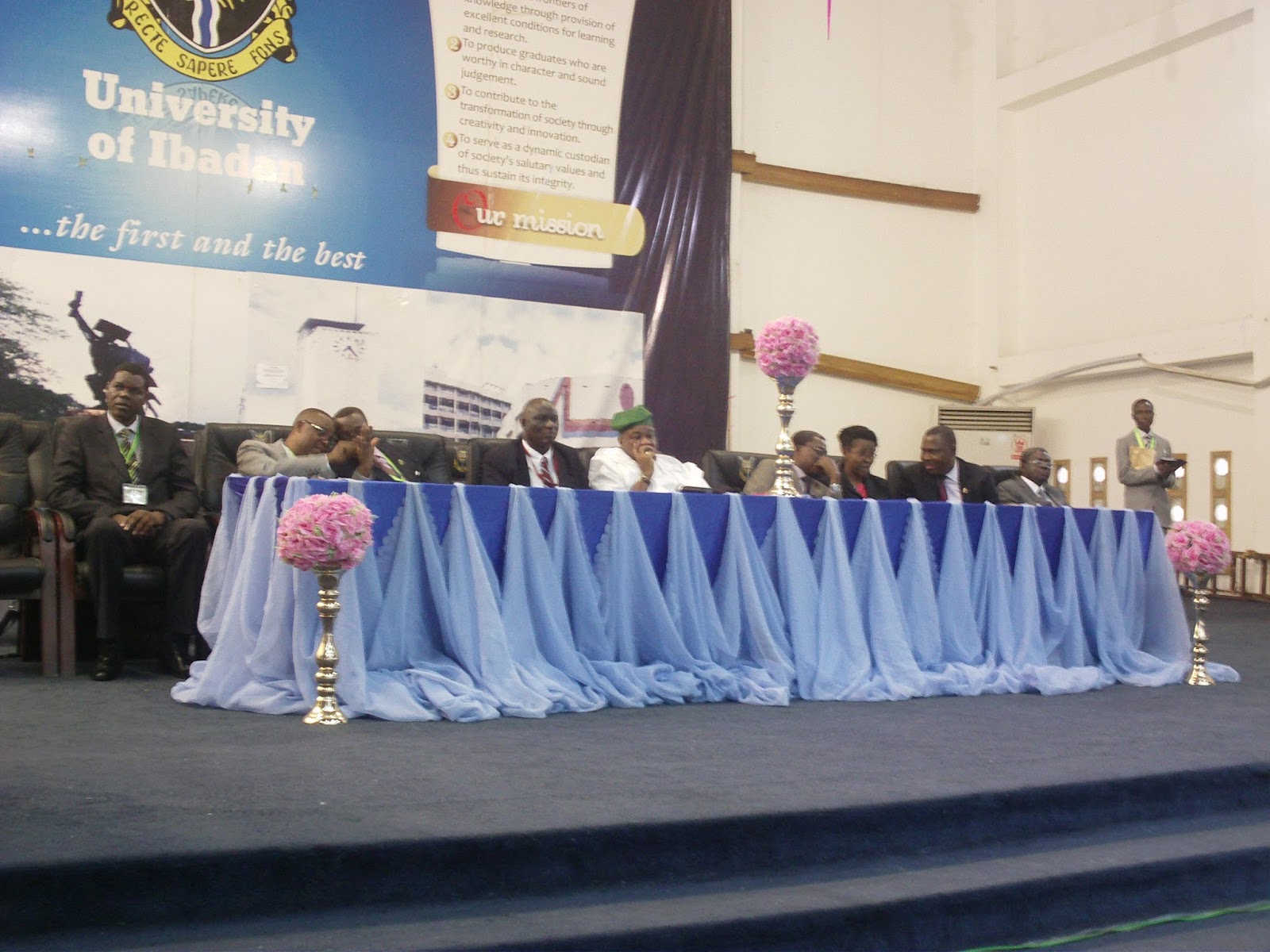
Prof. Ogundipe, Deputy Vice-Chancellor (Academics & Research) addressing participants

Many academics ultimately strive to become effective researchers and global leaders in their field. During the workshop, participants proposed and discussed various tactics that would help the researcher towards professional leadership. These included research uptake, mobile research and utilisation of technology and communication for networking and dissemination, as well as the importance of learning from role models within the workplace and wider academic fields. Role models can come in many forms, but within the academic research environment these are most likely to appear in the form of mentors. Researchers may find that they take on the role as mentor, as well as mentee. During the workshop, the CVFs offered personal anecdotes on their experiences as mentors, as well as professional tips and advice. Utilising the experiences of mentors could be critical in planning career development within an institution. Senior members of staff and personal managers could potentially give advice and support to their mentees, providing important guidance in seeking promotion or research opportunities.

CIRCLE Fellow Catherine Nnamani delivers a session

Nevertheless, finding time for development opportunities amidst a heavy workload within a research department can be difficult, especially for those who take on more administrative and teaching responsibilities at growing or overstretched institutions. The CVFs had ample experience as both mentees and mentors, and facilitated excellent discussions. The various debates that arose during the workshops were very thought provoking, but specific issues were highlighted as being particularly acute in Nigeria such as the lack of international networks and opportunities for collaboration and the growth of younger institutions struggling to build the capacity of their overstretched members of staff. Each participant had their own unique experience to contribute, and their innovative ways of overcoming their obstacles were inspirational for all that attended.

After an intensive 3 days, the workshop drew to a close. Not only had the participants developed tools to further establish their academic careers, but they had managed to create networks and potential routes through to future collaboration. As the participants filed out of the lecture hall, the atmosphere was bubbling over with anticipation (and not only due to the tea and biscuits that were waiting outside).

It was a pleasure to attend the workshop, and a wonderful opportunity to meet the CVFs and workshop participants. Make sure you keep an eye on the blog as we will be featuring CVFs profiles in the following posts.

Tuesday, 13 September 2016

Supporting the research leaders of the future at the ACU Conference of University Leaders, 2016

In partnership with Vice-Chancellors' Ghana, The ACU Conference of University Leaders 2016 was hosted by the ACU in July this year. The main focus of the event was to bring together senior university staff to ‘debate key issues in higher education and explore shared solutions with a diverse range of international colleagues’. While the majority of attendees at the event were therefore high ranking university officials, one of the key themes under debate was how the next generation of university leaders could best be supported. I was privileged to attend the event and to jointly present, together with Professor Graham Furniss, the recently published ACU-British Academy report, ‘The next generation: ideas and experience in African researcher support’. We shared the panel with two early career researchers - Herine Otieno-Menya and Dr Olawale Olayide - also presenting their ideas and experience on support for early career researchers. Andrea Johnson from the Carnegie Corporation of New York, USA, provided the response to our presentations.

It was interesting to consider different forms of support for early career researchers and how this could be maximised to be most effective. There was also useful feedback from Ms Johnson on The Next Generation report, some of which we have already been considering for further development of the research and some of which could also be useful cross-cutting themes for much work with universities. For example, thinking of universities as systems (systems thinking is a topic currently – and rightly –hugely popular in the international development sector at the moment) and how support for early career researchers sits in that system. A topic touched upon in the report was whether it is more effective to approach change within this system from the faculty level, then involve institutional leadership, or vice versa. Perhaps this is best determined based on the type of institution, its culture and the particular entry point for the programme of support.

Again, reflecting the need to understand institutional context, the varying needs and objectives of researchers in different disciplines was highlighted (for example, in some disciplines the quantity of publications may be more important, for some it may be the use of cutting edge technology and in others ensuring the impact of research on policy may be more important). There were further questions around where support should be directed (also a topic we touched upon in researching the report). Should we be targeting just the most promising research or raising standards more broadly? What about teacher training as opposed to researcher training? The report made reference to the use of online learning, but perhaps there is the potential to also consider other modes of learning, such as split-site PhDs or PhDs by distance. Many of these points relate back to a key concept emphasised in the report: it is vital that early career researcher support is shaped by, and embedded in, the priorities of the academics (junior and senior), faculties and broader institutional and societal objectives. However, higher education institutes are, indeed, complex systems with complex needs so to do this effectively will need careful consideration and reflection.
Tawakalitu Bola Onifade, Caroline Moss, Victoria Tanimonure, Eunice Thomas and other delegates
In addition to sharing the panel with Dr Olayide, I was also very pleased to catch up with a number of early career researchers from the CIRCLE programme. Funding was very gratefully received from the National Research Foundation, South Africa, for several CIRCLE fellows to attend the event. The fellows made full use of the opportunity to join various sessions of interest and to broaden their networks. Several sent their gratitude and shared some of their highlights and reflections, some excerpts of which are captured below:


Dr Amos Apraku shared his appreciation of the measure of support for early career researchers and higher education in Africa:

It was gratifying to note governments, university leaderships and the Commonwealth as a political entity continue to place education and research at the centre of development in less-developed countries, particularly in Africa. Similarly, various funding institutions and scholarship awarding bodies are committed to this gesture (prioritisation of research and development) by continually making funding available to emerging  academics from poor countries with special focus on women. To whom much is given, much is expected; beneficiaries of various scholarships and research funding and their institutions are therefore expected to give back to society in the form of using research and technology to develop societies.
Amos Apraku, Caroline Moss and Benson Iweriebor
Dr Benson Iweriebor reflected on a number of the sessions of the conference as well as his first experience visiting Ghana and the opportunity to engage with different groups at the event:

The trip to Ghana was very eventful as it was my first time visiting that country. The conference was well organised and attended by eminent scholars from across Commonwealth nations from the Caribbean, to Asia, to Canada, Australia, Fiji, and Africa. I was privileged to meet many erudite scholars who were university administrators… I was also able to attend concurrent sessions throughout the conference: ‘Funding trends and opportunities’ and ‘Developing the new generation’ on the first day which culminated in a welcome party organised by the Vice Chancellor of the University of Ghana, Legon. It was an opportunity to unwind and meet fellow attendees and we were entertained by the university’s cultural group where people danced to the rhythm of drums. Oh, I loved the way the delegates from Sri Lanka danced enthusiastically to the beating of the drums.

The second day of the conference… ended with a plenary entitled ‘Addressing historical injustice: from Rhodes to reparations’ with Profs Sir Hilary Beckles (VC, University of the West Indies) and Prof Adam Habib (VC, University of the Witwatersrand). Both talked about their experiences as university administrators on the issues of the slave trade and need for reparation following student protests to have the Rhodes statue in South Africa removed. To cap the day’s events, a gala dinner was held for delegates at the State House with The Rt Hon Patricia Scotland QC being the guest speaker. Delegates were treated to good music and a sumptuous dinner. It just felt like being home in Nigeria with my colleagues Dr Eunice Thomas, Apraku Amos, Bola Onifade and Victoria Tanimonure. I miss these great and amazing souls and thank CIRCLE and the NRF for giving me the possibility to meet them all.


Victoria Tanimonure shared how several sessions at the conference highlighted the importance of research uptake as part of the research process:

The concurrent session that benefitted me most was on the research uptake ‘Ensuring that research benefits society’. There are many research outputs wasting away on the shelf without transferring them to appropriate stakeholders that could benefit from them, thereby bringing university research into use. This has been my concern over the years. Sometimes I asked myself the usefulness of all this research work - are they just for our promotion and CVs? I think it is high time we did things differently in this regard. One of the speakers who shared her experience on research uptake from her university’s perspective mentioned that they have put in place in her institution an opportunity for research uptake starting from the departmental level, then to the faculty and institutional levels. I felt strongly in my heart that I can pioneer that from my department and faculty as soon as I return to my institution. To achieve this, I found the handbook by DRUSSA very helpful.

Also, the conference debate was really an interesting one and, to me, it still boiled down to the issue of research uptake: how society can benefit immensely from universities as they rise up to the task of social responsibilities. I am sure we still have a long way to go in Africa, and Nigeria in particular, but a journey of a thousand miles begins with a step. We will get there. 


Dr Eunice Thomas shared how she had benefited from attending various sessions at the conference:

On the first day of the Programme, after the opening session and the keynote address by Kofi Annan, I attended a concurrent session where speakers shared with us on funding trends and opportunities in the UK, Sweden and USA. This was an eye-opener to various funding bodies and how to access them… In the afternoon, speakers talked about various aspects of development for upcoming researchers and the knowledge I garnered will be of a great benefit to me in my career.

The second day of the conference witnessed many sections.  Prof Crispus Kiamba talked about the Commonwealth Scholarship and Fellowship Plan (CSFP) taskforce. He highlighted the current goals of CSFP, their operations and the endowment fund set up.  That same day, in the afternoon barriers and opportunities in Africa were discussed by 3 speakers.  Later, Accessibility and the various norms in selected universities were discussed.  I now have a better understanding of the operations of the Commonwealth Scholarship. I am most grateful to the NRF for sponsoring me for this conference. I must say that you have equipped me with long term tools that will contribute immensely to my success in making a change in Africa in my career. It is a great privilege you have given me to interact with contacts from various fields all over the world.  Thank you once again. 

Tuesday, 5 April 2016

Gender in climate change research

Participants at the CIRCLE proposal writing workshop for female applicants to cohort 3

Women are disproportionately affected by climate change. They have a higher dependence on natural resources which are increasingly in short supply; natural disasters, which are becoming more commonplace, kill more women than men; and women often lack the social capital in society to adapt to changing circumstances or to make their voices heard. Involving women and other marginalised groups in tackling climate change and in shaping approaches to cope with and adapt to its impacts can greatly enhance their effectiveness.
During the Paris climate talks in December, gender was one of the key topics under discussion. However, some have suggested that the debate did not move far enough beyond the impacts of climate change on women to consider how women themselves can be active agents within the climate change debate. There is some discussion about women in agriculture and how they should be engaged in developing solutions on the ground, but what about women’s engagement within higher level policy discussions?
Though Africa will be one of the continents hardest hit by climate change, there are still not enough researchers within the continent examining the impact of climate change and exploring approaches to mitigate and adapt to its effects. Women in sub-Saharan Africa are especially underrepresented, making up just 30% of researchers.
Recognising the lack of African researchers in the field of Climate change, the Climate Impact Research Capacity and Leadership Enhancement in Sub-Saharan Africa (CIRCLE) was developed to support 100 one year fellowships over the course of three years for early career researchers to conduct a research project at leading African institutions in the field of climate change. The programme is now going into its second year with the start of the second cohort of CIRCLE visiting fellows.
CIRCLE also aims to award 50% of its fellowships to female researchers, in an effort to address the underrepresentation of women in this field. To date, 48% of CIRCLE fellows have been female researchers. Over the course of last year a number of female researchers from the first cohort of fellows have contributed their experiences to the CIRCLE blog and it is evident that a lot has been achieved by both male and female fellows.
At the final workshop for the first cohort of CIRCLE Visiting Fellows (CVFs), a presentation was made by Mercy Derkyi on her plans to establish a Centre for Climate Change and Gender Studies at the University of Energy and Natural Resources, Ghana, inspired by the work undertaken during her fellowship. This exemplified one of the key aims of the CIRCLE fellowships, to foster the leadership skills of CVFs so that they can have a wider reaching positive impact. It is hoped that the female CVFs will act as role models to encourage, inspire and assist more women to undertake climate change research.
The CIRCLE programme is also an important opportunity for female researchers to strengthen their profile and contribute to the academic dialogue on climate change. Another CVF, Catherine Mungai, recently won an award for her research paper, emerging from her CIRCLE research, presented at the Symposium on Climate Change Adaptation in Africa 2016, CGIAR.
There have been some challenges, however, in ensuring equal representation of male and female fellows as part of the fellowship. During the application process some institutions struggled to find female candidates for the fellowships. Furthermore, the applications that were received were often not as developed in their scientific design and climate change relevance as those of their male counterparts.
To confront some of the challenges around attracting sufficient numbers of high quality applications from women the CIRCLE management team put in place a number of measures:
  • Greater flexibility was allowed for fellows whose family circumstances would affect their ability to travel to other countries to take up their fellowship;
  • The specification of a maximum 5 year gap between PhD completion and fellowship was extended for those who had a career break for family reasons
  • Home institutions were made aware of the 50% target and any institutions nominating more that one candidate had to nominate at least one woman.
  • In February 2016 a workshop was run for potential female applicants for the third and final cohort of CIRCLE fellows to help strengthen their proposal writing skills, with particular reference to their CIRCLE proposal submissions.
With reference to the last initiative, each home institution was invited to nominate up to two female researchers to attend the workshop, run by Dr Maggie Opondo and Dr Sari Kovats, both leading female researchers in the field of climate change. Not only did the workshop cover proposal writing skills, but also a more in-depth look at gender in climate change and the workshop leaders spent some time with participants reviewing their draft proposals for the programme. One workshop participant commented:
“The workshop has helped to broaden my understanding on proposal writing especially with respect to climate change. I was able to review my CIRCLE proposal and I feel more confident now that I can approach proposal writing with ease. I also acquired new and relevant skills which will be beneficial for my academic discipline.”
Another workshop participant observed:
“The important aspects explained on how to make your proposal feasible as well as using the gender lens in climate change studies were wonderful. I have benefited not only as a CIRCLE programme fellow but as a researcher.”
The drive to increase female representation for the application process seems to have been effective, with 60% female nominations for this cohort compared to 39% for both cohorts 1 and 2. Participants at the workshop in February also indicated that their confidence in writing their proposal has been increased and the workshop leaders identified a number of exciting proposal topics, which we are looking forward to receiving for the final round of CIRCLE applications.


Caroline Moss is a programme Officer at the Association of Commonwealth Universities

Monday, 11 January 2016

Exploring the next steps for collaboration in research on the climate resilient Bambara groundnut in the Northern Region of Ghana

The African research partners on the study on socio-economics of Bambara groundnut (Vigna subterranea (L.) Verdc) met on 7 December, 2015 to review the project, set research priorities for future research collaborations and joint publication of research outputs.
Bambara groundnut originates from West Africa and is considered a climate change resilient crop due to its tolerance to drought. Research on its use is therefore complementary to the aims of the CIRCLE project. The pilot study, funded by the Crops for the Future (CFF), Malaysia, focused on the production, marketing and processing of Bambara groundnut. One MPhil graduate was trained during the study under the co-supervision of the research team and more graduate students have since expressed an interest in undertaking research on the genetics, physiology and pathology of the crop.

Left to Right: Professor George Nyarko, Dr Olawale Olayide and Dr Samuel Donkoh
The team comprises Professor George Nyarko, Dr Samuel Donkoh and Dr Olawale Olayide, a Post-doctoral Research Fellow in cohort I of the Climate Impacts Research Capacity and Leadership Enhancement (CIRCLE) programme. It was the first time the research team met face-to-face since the project started in 2014. During the meeting, the importance of communicating the findings of the study through journal publications, conferences, workshops and side events, was emphasized. Already, the team has prepared four joint papers from the study, with one accepted for publication in 2015 and the other papers currently under review in international peer-review journals.

Thursday, 17 December 2015

Exploring the benefits of Science Diplomacy at the TWAS Workshop, Italy


Science diplomacy takes many forms: When nations come together to negotiate cooperative agreements on fisheries management or infectious disease monitoring, they need scientific expertise. When scientists come together for complex multi-national projects in astronomy or physics, their nations devise diplomatic agreements on management and financing. And when political relations between two nations are strained or broken, joint research efforts can give them a way to keep talking – and to build trust.
Today, the need for science diplomacy is growing. In collaboration with the American Association for the Advancement of Science (AAAS), TWAS (The World Academy of Sciences) organised a 5-day in Trieste, Italy from the 30 November to 4 December 2015 to discuss key contemporary international policy issues relating to science diplomacy and sustainable water management, including the use of shared rivers and underground aquifers, cross-border pollution issues, safe drinking water and more. The programme highlighted several key components, including how to translate scientific work into the policy arena and the role of gender in effecting improved communication of scientific works/outcomes to society.
I was inspired to discover that the director of TWAS was Prof Murenzi from Rwanda and also that there was another powerful organisation for gender advocacy called GENDERInSITE (http://www.genderinsite.net/ ) aside the Organization for Women in Science for the Developing World (OSWD). In general, I learnt that there was the need to learn diplomacy in writing winning proposals, disseminating our research outcomes and finally to have a real-impact, not only just with scientific publishing but putting a smile on communities with our scientific work!

Dr Amos Kabo Bah is from the University of Energy and Natural Resources, Ghana and is in the final stages of completing his CIRCLE Visiting Fellowship at the University of Ibadan, Nigeria.

Friday, 13 November 2015

CIRCLE Post-Doctoral Research Fellow Contributes to a Book Project on International Perspectives on Industrial Ecology


A Post-Doctoral Research Fellow under the Climate Impact Research Capacity and Leadership Enhancement (CIRCLE) Programme, Dr Olawale Emmanuel Olayide, shares the African Perspective in a Book Project on International Perspectives on Industrial Ecology. The Book which is written by world renowned experts in the field of industrial ecology and Dr Olayide’s contribution is contained in Chapter 3 of the Book. The chapter is entitled “Industrial Ecology, Industrial Symbiosis and Eco-Industrial Parks in Africa: Issues for Sustainable Development” (http://www.elgaronline.com/view/9781781003565.00011.xml).

International Perspectives on Industrial EcologyExtract of the Chapter
The idea of industry finding uses for non-product outputs (by-products and wastes) is not a new one (Desrochers, 2001). However, local context and incentives change with the global drive towards efficient use of resources (Deutz, 2014) and sustainable development (Posch, 2010). This contrasts with the conventional economic growth trajectories that lead to increased negative ecological impacts (Boons et al., 2011). In Africa, and indeed globally, multiple factors are bringing about a change in attitudes and making the prospects for industrial ecology (IE) more attractive. The growing scarcity of resources together with advances in technology and greater urbanisation are all heightening awareness that the time is ripe for change to more sustainable development (Ellen MacArthur Foundation, 2013). IE considers non-human ‘natural’ ecosystems as potential models for industrial activity and places human technological activity (industry) in the larger ecosystems that support it, examining the sources of resources used in society and the sinks that may act to absorb or detoxify wastes.

Editors and Scope of the Book
The book is edited by Pauline Deutz, Donald I. Lyons and Jun Bi and focuses on high-level policies on industrial ecology-related issues such as circular economy and industrial symbiosis. The authors combine their diverse experiences in both research and teaching to examine the topic as a business, community, and academic endeavor in different settings worldwide. The book project which started in November 2013 was completed in March 2015, and published, in print and online, on 30 October, 2015.

Thursday, 29 October 2015

CIRCLE Fellowship and Travel Grants Promote Research Visibility and Networking during Global Events Held in New York, USA

Olawale Emmanuel Olayide, University of Ibadan, Ibadan, Nigeria (Home Institution)
Cohort 1 Visiting Research Fellow

Introduction
This report captures the activities at the conferences, meeting, workshop, and United Nations summit on Sustainable Development Goals (SDGs) during 18 September to 15 October, 2015 in New York, USA.

The Third International Conference on Sustainable Development (ICSD)
The third International Conference on SustainableDevelopment (ICSD) was held at the Columbia University, New York, in September. With over 1000 participants from around the world the conference aimed to identify and share practical, evidence-based solutions that could support the Sustainable Development Goals (SDGs). I participated actively as a member of the Scientific Committee and Chair of the Technical Session on Climate Change and Access to Energy and also presented a research paper titled “Review of Vulnerability and Policy Responses to Agricultural Water Supply and Extreme Rainfall Events in Nigeria” (click here for a link to the presentation). The conference offered a great opportunity for networking and sharing research experiences with other international researchers, as well as receiving feedback on research outputs. A key point emerging from the session on climate change and access to energy was the need for development (at community, regional and national levels) that favours progressive and sustainable investment in renewable sources of energy.

Olawale Olayide, CIRCLE Post-Doctoral Research Fellow at the Third International Conference on Sustainable Development (ICSD), Columbia University, New York City, USA

Special Panel on Extractive Industries and the Sustainable Development Goals (SDGs): Enhancing Collaboration for Transformation and Sustainability
The special panel session on extractive industries and the sustainable development goals (SDGs) that followed the ICSD conference emphasised that the lack of prudent management of the natural resources was a major challenge limiting sustainable development of the extractive industry. The panelists concurred that the oil and gas sector should be differentiated from the mineral industry. It was also noted that the oil and gas sector is a major contributor to climate change through carbon dioxide emissions. The panel opined that renewable sources of energy should be encouraged in order to mitigate the impact of fossil fuels on the environment. The importance of the mining sector in terms of its contributions to economic growth was acknowledged, but this needs to be weighed up against the negative impacts on health and the environment. It noted that the world has a lot of untapped natural resources which could be harnessed for sustainable development. It was emphasized that research and policy frameworks should focus on such issues as reclamation, remediation and closures of mines so as to engender sustainable development in the mining sector.

The final event I attended in New York offered scholars and researchers the opportunity to present recent research findings to a global scientific audience and community of practice. The various presentations provided understanding on the behavioural, biophysical, economic, institutional, political, social and technological drivers of current and future global food security. The conference also addressed the issues of food system activities, including processing, distributing and consuming food, as well as food production from crop, livestock, tree, freshwater and marine sources; the availability, access, utilization and stability dimensions of food security; and the synergies and trade-offs between economic, environmental, health and social objectives and outcomes.

Cross-section of Participants during One of the Plenary Sessions at the Second International Conference on Global Food Security 2015 held at Cornell University, Ithaca, New York, USA

I participated actively and made a presentation titled: “What Happens When Rain Ceases to Fall? Trends, Variability and Hotspots of Rainfall, Food and Agricultural Production Indices in Nigeria Using Statistical and Geographic Information Systems Approaches”. The conference provided me with an opportunity to expand my research network with contacts in Cornell University’s research on Climate Smart Farming as well as the Food Climate Research Network of Oxford University in UK. More importantly, the global conference was facilitated by Elsevier and the journal on Global Food Security. I plan to submit the full paper presented at the conference to the journal on Global Food Security.

ACKNOWLEDGEMENTS
I profoundly acknowledge and appreciate the financial support from the Department for International Development (DfID) which was provided under the Climate Impact Research Capacity and Leadership Enhancement (CIRCLE) programme. The conducive environment for research provided the University of Ibadan, Ibadan, Nigeria (Home Institution) and Kwame Nkrumah University of Science and Technology, Kumasi, Ghana (Host Institution) is well cherished. I also appreciate the African Growth and Development Policy (AGRODEP) Modeling Consortium which is facilitated by the International Food Policy Research Institute, and United Nations Sustainable Development Solutions Network UNSDSN), for providing additional funding support.

Friday, 11 September 2015

Outcomes of the 6th Annual Ibadan Sustainable Development Summit (ISDS) 2015


Preamble

2015 will see the replacement of the Millenium Development Goals with the Sustainable Development Goals (SDGs). It is therefore apposite to consider promises that the SDGs hold for overcoming the various development challenges in Africa. Africa cannot afford to be left behind in the on-going global development agenda setting. The ensuing SDGs, therefore, offer another opportunity for Africa to be more proactive in ensuring sustainable development in the continent as well as progressive transformation of economies and societies. Considering the disparate achievements of many African countries in the soon to be concluded MDGs, the organisers of the 6th annual Ibadan Sustainable Development Summit (ISDS) considered it apt to bring to the fore the level of preparedness or otherwise of the continent and what lessons it has learnt from the MDGs, as well as the expected roles from numerous stakeholders in the sustainable development spectrum.

The Organization of the Summit, Participation, Paper Presentations and Publications

The summit was organised by the University of Ibadan Centre for Sustainable Development (UI-CESDEV) in collaboration with the African Sustainable Development Network (ASUDNET) and Sustainable Development Solutions Network- Nigeria (NSDSN). It was held during 23 – 28 August, 2015. The theme for the summit was The Post-2015 Sustainable Development Agenda: Whither Africa?


About 230 people from 10 countries in Africa (Ghana, The Gambia, Kenya, Ethiopia, South Africa, Nigeria) and Europe (Italy, France, Netherlands, United Kingdom) participated at the summit. There were also representatives of Governments (including high-level delegation from the Gambia) as well as Non-Governmental Orgranisations (including the Nigerian Network of NGOs), Students and Alumni Associations. Young scholars and researchers presented papers on a range of sustainable development issues at the summit. There were two keynote addresses by Professor Godwell Nhamo of the University of South Africa (UNISA), a CIRCLE supervisor,  and Ambassador Oluseyi Onafowokan, the Nigerian High Commissioner to Ghana. 11 plenary sessions based on the sub-themes of the summit were led by seasoned scholars. A total of 67 technical paper presentations were made. The plenary papers will be published in the summit proceedings while authors of the technical papers are advised to send the revised papers for consideration and publication in the African Journal of Sustainable Development (AJSD) (http://www.ajol.info/index.php/ajsd).

Formation of Research and Working Groups

For the implementation of the SDGs, the meeting grouped the SDGs by similarity and complementarity, and proposed the following five research and working groups for the purpose of driving research, advocacy and implementation of the goals. The summit therefore, set up five research and working groups around the Sustainable Development Goals as follows:

Group 1: Goal 1: End poverty in all its forms everywhere; Goal 2: End hunger, achieve food security and improved nutrition, and promote sustainable agriculture; Goal 3: Ensure healthy lives and promote well-being for all at all ages; and Goal 8: Promote sustained, inclusive and sustainable economic growth, full and productive employment and decent work for all.

Group 2: Goal 4: Ensure inclusive and equitable quality education and promote life-long learning opportunities for all; and Goal 5: Achieve gender equality and empower all women and girls

Group 3: Goal 9: Build resilient infrastructure, promote inclusive and sustainable industrialization and foster innovation; Goal 11: Make cities and human settlements inclusive, safe, resilient and sustainable; Goal 12: Ensure sustainable consumption and production patterns; Goal 16: Promote peaceful and inclusive societies for sustainable development, provide access to justice for all and build effective, accountable and inclusive institutions at all levels.

Group 4: Goal 6: Ensure availability and sustainable management of water and sanitation for all; Goal 7: Ensure access to affordable, reliable, sustainable, and modern energy for all; Goal 13: Take urgent action to combat climate change and its impacts; Goal 14: Conserve and sustainably use the oceans, seas and marine resources for sustainable; Development; Goal 15: Protect, restore and promote sustainable use of terrestrial ecosystems, sustainably manage forests, combat desertification, and halt and reverse land degradation and halt biodiversity loss.

Group 5: Goal 10: Reduce inequality within and among countries; Goal 17: Strengthen the means of implementation and revitalize the global partnership for sustainable development

Membership of the research and working groups comprises representatives from the academia, government and non-governmental organisations and they cut across institutions, disciplines and universities. Others are encouraged to join. The groups will be expected to compete for grants, do advocacy and enlightenment, regarding the SDGs. Several participants in the groups are also involved in the CIRCLE programme, including Prof Godwell Nhamo, from the University of South Africa; Prof Labode Popoola, from the University of Ibadan; Dr Olawale Olayide from the University of Ibadan and Dr Divine Appiah, a CIRCLE Visiting Fellow currently hosted at the University of Ibadan.

Need for Collaboration

Participants emphasized the need to actualize the important goal of partnership/collaboration as key to achieving the other goals. It therefore, resolved to sustain the unity of purpose demonstrated at the meeting by the key stakeholders from the civil service, universities, research centres, NGOs, students, and the private sector. The universities in particular, were challenged to take the leadership position in the implementation process, with government, providing the needed support. The meeting also highlighted the steps taken towards actualizing a pan-Africa partnership towards achieving the SDGs by Gambian President Yahya A.J.J. Jammeh’s  Pan-African commitment to Sustainable Development and support for an annual Ibadan Sustainable Development Summit. The Gambia President sent a powerful delegation of nine senior members in his government comprising a junior minister, permanent secretaries, Director General, and Special Assistants in the Presidency. This was viewed as exemplary, for which other African heads of government should emulate in subsequent summits.

Conclusion and Next Steps

The theme of the summit was very timely, as the summit offered a veritable platform on current debates on the sustainable development goals and underscored the role of Africa in the processes and expectations of implementation frameworks. The research and working groups are tasked with developing proposals and strategies for domesticating the Sustainable Development Goals for Africa, especially the ECOWAS region. They would also sustain the collaboration among the academia, NGOs, PSOs and governments in Africa. International support and collaboration were also emphasized as germane to achieving the SDGs. The seventh ISDS will take place in August 2016 and the theme will be determined in due course.

Labode Popoola
Director, CESDEV & Co-Director, SDSN-Nigeria

Olawale Olayide
CIRCLE Post-Doctoral Visiting Research Fellow, Kwame Nkrumah University of Science and Technology, Research Fellow & Coordinator, EPNARP,  CESDEV, University of Ibadan

For and on behalf of the Organisers

Wednesday, 29 July 2015

CIRCLE at the 4th Climate Change and Population Conference on Africa

Dr Benjamin Gyampoh from the African Academy of Sciences is keeping us updated from the 4th CLIMATE CHANGE AND POPULATION CONFERENCE ON AFRICA, 29 – 31, July, 2015, where we are pleased to have a strong CIRCLE presence.

CIRCLE Visiting Fellows at the conference, from the left: Cathy, Celestine, Batholomew, Divine and Philip

Dr Gyampoh will be making a presentation on CIRCLE titled: “CIRCLE: developing human capital and increasing knowledge for management of Climate Impacts”

6 CVFs are also presenting their work at this conference. They are:
  1. Mercy Derkyi:  Exploring Gender, Climate Change Vulnerability and Adaptive Capacity through an Intersectionality Lens: Derkyi, M; Adiku, S, Akwen, N, Dovie, D ,Codjoe, S , Nelson, V and E. Awuah
  2. Phillip Antwi-Agyei: Participatory mapping of multiple stressors contributing to vulnerability across scales in the Savannah zone of Ghana.  P. Antwi-Agyei, S.N.Codjoe; S. Adiku; B.D.Dovie
  3. Divine Odame Appiah: Smallholder Farmers’ On-Farm Adaptation to Climate Variability in the Bosomtwe District of Ghana. Divine Odame Appiah and Sampson Yamba
  4. Cathy Mungai: Does Gender Influence the Uptake of Climate-Smart Agriculture? Experiences from Nyando, Kenya. Catherine Mungai and Mary Nyasimi
  5. Olga Laiza Kupika:  Embracing local ecological knowledge in climate change adaptation in Mukwichi communal land, Zimbabwe. Olga Laiza
  6. Batholomew Aleke: ICT adoption in the wildlife sector: Implications for climate change adaptation and disaster risk reduction in Africa. Bartholomew Ituma Aleke, Kupika Olga L.

Celestine Afiukwa is also attending the conference but not making a presentation.